Custom Apparel for Youth Clubs That Gets Worn
By The Velocity Wear Team
Need this made?Get pricing for this product— free, no obligation, 50 pieces minimum.
The only real test for youth club apparel is whether young people wear it when they are not at the club. That points you at heavyweight oversized hoodies, restrained colours and a graphic that stands up on its own, rather than a club name printed large across the chest. Interestingly, staff kit should be designed the other way round: loud, obvious and instantly recognisable.
The Wear Test
Young people are ruthless judges of clothing and completely honest about it. A thin hoodie in an institutional colour with the project name across the chest reads as something handed out, and it stays in a bag. A heavier hoodie in black, sand, forest green or washed grey with a considered graphic reads as something they would have chosen, and it gets worn to school.
That difference is worth real money, because a hoodie worn around town builds the club's reputation with other young people faster than any poster in a library. Weight matters more than most committees expect: a substantial hoodie feels like a product, a lightweight one feels like a giveaway, and everyone can tell within a second of picking it up.
Staff Kit Should Be the Opposite
Here is where the usual assumption gets inverted. Members' kit should be subtle. Staff kit should be shouty. On a trip to a busy park, at a festival, or doing detached work on an estate at night, a young person needs to be able to identify a youth worker at fifty metres, and so does a parent, a police officer or a member of the public.
That means bright colours, a clear role word across the back in plain type, and consistency across the team. Whether and how you use it is a matter for your own policies and risk assessments and current official guidance, not for us, but from a purely practical angle a staff garment that is visually distinct from members' kit is the version that works. It also prevents the slightly awkward situation of a worker and a fifteen-year-old wearing identical hoodies.
Let Them Design It, With Limits
Running a design competition is the single best thing a youth project can do with an apparel budget. Ownership does most of the work: people wear what they helped make. It also produces better graphics than a committee does, because young people know what looks current and adults mostly do not.
Set the constraints up front, though, so the winning entry is producible. A pencil sketch with soft shading will not embroider, and thin lines disappear in stitching. DTF handles detailed full-colour artwork with no per-colour setup, so it usually suits a hand-drawn winner. For embroidery, ask for bold shapes and few colours.
- Ask for bold, simple shapes rather than shading, and no tiny text.
- Set a colour limit if you plan to screen print, since setup is charged per colour.
- Choose a garment colour before the design competition, not after, so entries are drawn for the right background.
- Get the winning artwork redrawn cleanly before production, and show the young designer the proof.
- Preview it in the free Design Studio so everyone sees the real scale on the garment rather than a big image on a screen.
Sizing for People Who Are Still Growing
Order up. A thirteen-year-old will not fit the same hoodie in eighteen months, and an oversized fit is what most of them want anyway, so generosity costs nothing in style terms and buys another year of wear. Our 50-piece minimum applies per order rather than per size, so you can spread the run across child and adult sizing without committing to fifty of anything.
Keep a couple of spares in the commonest sizes. Handing a new member a hoodie on their second visit is a powerful thing, and it cannot happen if the next order is four months away.
“"You can tell whether the design worked by counting how many hoodies you see on the street, not how many you see in the building."”
Trips, Residentials and Being Countable
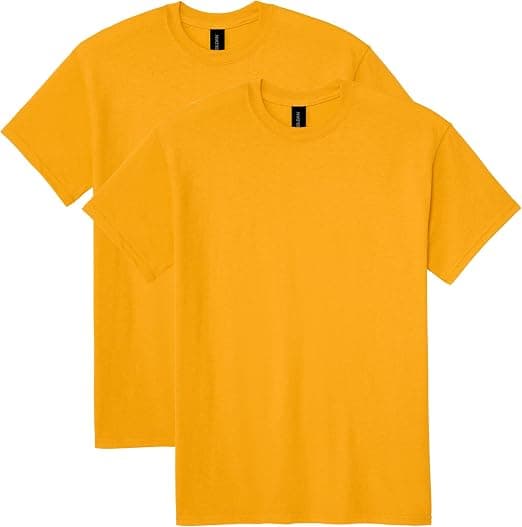
A bright matching tee makes headcounts dramatically easier at a theme park or a city trip, and makes it obvious that this is an organised group. That is a different garment from the club hoodie: cheap, single colour, printed, ordered in a batch you do not mind losing pieces from. Follow your own off-site policies and current official guidance on supervision and visibility, then use the apparel to make the practical side easier.
Residentials also justify a keepsake garment. A tee with the year and the place on it is worth ordering separately, because it is a memento rather than everyday wear and nobody expects to reorder it.
Making One Order a Year Work
Youth projects rarely have money for repeated small orders, so consolidate. Combine members' hoodies, staff kit and trip tees into one order and you clear the 50-piece minimum comfortably while the bulk discount, which reaches up to around 35% at higher quantities, works in your favour. Model a couple of scenarios in the free instant price calculator first.
Timing Around Term and Summer Programmes
Production starts at artwork approval rather than order placement, which matters when the artwork is coming out of a design competition with judging and redrawing in front of it. Screen printing and embroidery take around 10 to 15 working days from approval, with more complex jobs nearer 15 to 20, and UK delivery is typically 2 to 5 working days after dispatch on a tracked service. Run the competition in spring if you want hoodies for the autumn term, and everything is briefed, proofed and ordered online so nobody has to drive anywhere with a memory stick.