Window Cleaning Workwear: Wet, High and Seen From Below
By The Velocity Wear Team
Need this made?Get pricing for this product— free, no obligation, 50 pieces minimum.
Window cleaning workwear has two jobs at once: keeping a permanently damp operative comfortable, and telling a street who you are. That points to quick-drying synthetic fabric rather than cotton, branding sized and placed for someone looking up from ground level, and a decoration method that shrugs off frequent hot washing. Velocity Wear supplies branded window cleaning kit online from a 50-piece minimum, with sizes mixed freely across the run.
Cotton Is the Wrong Fibre for a Wet Trade
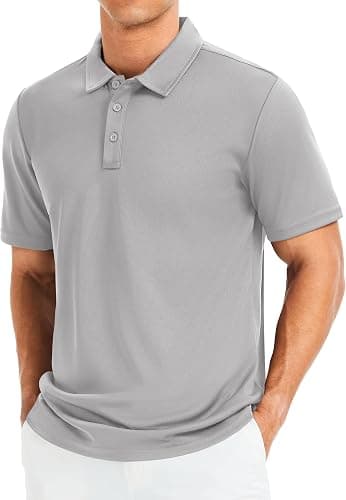
Cotton wets out, holds the water, goes heavy and then goes cold. On a February round that is genuinely miserable, and a cold operative works slower. Polyester and poly-rich blends shed water faster and dry on the body, which is why most serious window cleaning kit is synthetic. The trade-off is honest: polyester holds odour more stubbornly than cotton, so plan on more garments in rotation and shorter gaps between washes rather than pretending one polo will cover a week.
Pole Work Changes the Cut You Need
Reach-and-wash means arms overhead for hours. A standard-length polo rides up and leaves a wet gap at the back, so a longer body length matters more here than in most trades. Look for articulated or raglan shoulders that do not pull the hem when you extend, and be wary of chest pockets, which fill with run-off and drop phones. If you still run ladders, accept that the shoulder is the first thing to wear through, because that is where the stile rests.
Where the Customer Actually Sees Your Logo
This is the part most window cleaning firms get backwards. A left-chest logo is invisible for almost the whole working day, because you are facing the glass, up a ladder, or forty feet below the person watching. What the street sees is your back. What the householder sees through their own window is also your back. The upper back, across the shoulders, is the prime real estate, and it should carry the trading name at a size that reads from the far pavement.
- Upper back, large and high: company name and town, sized to read from across a road.
- Left chest, small: the logo that does its work in a doorstep conversation, not at distance.
- Sleeve or forearm: a phone number, visible while you are working at a window with your back to the room.
- Cap crown or peak: seen constantly by anyone standing below a first-floor window.
- Avoid the lower back, which disappears under a belt, a harness or a tucked hem the moment you reach up.
Embroidery on a Waterproof Jacket: Think Twice
Embroidery is superb on polos, softshells and fleeces. On a waterproof shell it is a different conversation, because stitching puts thousands of needle holes through a garment whose whole purpose is keeping water out. Some manufacturers permit it, some seal behind it, and some say do not. Ask the garment maker and follow what they tell you rather than assuming. If the answer is no, brand the fleece or softshell that lives under the shell, or use a printed transfer within their guidance.
Print That Survives Being Washed Every Night
Window cleaning kit gets washed more often than almost any other trade uniform, so wash durability outranks everything except fit. Screen printing is the workhorse for bold, limited-colour designs and is cheapest at volume, though setup is charged per colour. DTF handles detail and full colour with no per-colour setup and works happily on polyester and blends, which suits smaller runs. DTG is cotton only, so it rarely fits this sector. Sublimation is polyester only and light bases only, but it leaves no surface layer at all, so there is physically nothing to crack or peel.
“"Chest logos are for meetings. Window cleaners get looked at from behind and from below, and the kit should admit it."”
Hi-Vis for Kerbside and Commercial Rounds
Shop fronts, car parks, business parks and anything near moving traffic usually mean a hi-vis layer, and commercial sites often specify it in their own rules. Decoration on hi-vis needs care: keep prints and embroidery off the reflective tape, work within the plain panels, and check the manufacturer guidance for what may be applied to that specific garment. Site rules vary between clients, so confirm with the site rather than working from what the last one accepted.
Ordering and Restocking a Round
The minimum is 50 pieces per order with sizes mixed freely, which for a small round usually means one order covering polos, a hoodie each and a couple of spares. Bulk discounts reach up to around 35% as quantity climbs, so a two-van firm is better off ordering the whole year in one go than dripping out replacements. Production starts at artwork approval, not order placement. Screen printing and embroidery typically run around 10 to 15 working days from that approval, with sublimation and more complex jobs nearer 15 to 20, then tracked UK delivery of roughly 2 to 5 working days. Velocity Wear is an online supplier with no physical shop, so you brief and proof in the free Design Studio, check live costs in the instant price calculator, and have the finished kit delivered.