Taxi and Private Hire Uniform: Branding for a Seated Job
By The Velocity Wear Team
Need this made?Get pricing for this product— free, no obligation, 50 pieces minimum.
Taxi and private hire uniform has one constraint almost no other sector shares: it is worn sitting down, all day, with a seatbelt running across the torso and a seat back pressed to the shoulders. That changes where branding should go, which fabrics stay comfortable, and how the kit has to work around a licensing badge. Velocity Wear supplies branded driver kit online from a 50-piece minimum per order, with sizes mixed freely across the run.
A Seated Shift Wears Clothes Differently
Stand a garment up and it hangs. Sit in it for nine hours and it does something else. Hems ride up and untuck. Shirt fronts crumple against the belt. The seat presses creases into the shoulder blades that never quite fall out, the seat of the trousers wears before anything else, and the elbows go shiny from the door card and the wheel. None of that shows up in a studio photo.
Judge samples in the vehicle. Have a driver wear each candidate for a full shift, then look again at the end of it.
The Belt Runs Through Your Logo Zone
In a right-hand-drive car the belt anchors over the driver's right shoulder and crosses the body down to the left hip. It lies across the right chest and the centre of the sternum for the entire journey. A right-chest badge is simply buried. A left-chest logo usually survives, but once a driver is belted and settled into a driving posture it sits lower and flatter than it does on a hanger, and the wheel takes another bite out of it.
Two minutes will settle it for your own vehicles. Belt up in the driving seat and take a photo from the front passenger seat and from directly behind. Whatever is still readable in those two photos is where your branding belongs.
What Passengers Genuinely Look At
A rear-seat passenger spends the trip looking at the back of a headrest, the driver's right shoulder and sleeve, the side of a collar and a cap. At the kerb they see a shoulder and a cap through glass. On an airport job they see your upper back while you walk to the boot with a case. Almost none of that involves the chest.
- Sleeve, mid-upper arm: the one surface a rear-seat passenger looks at for most of a journey.
- Cap crown or peak: readable at the kerb, through a window, and above the headrest.
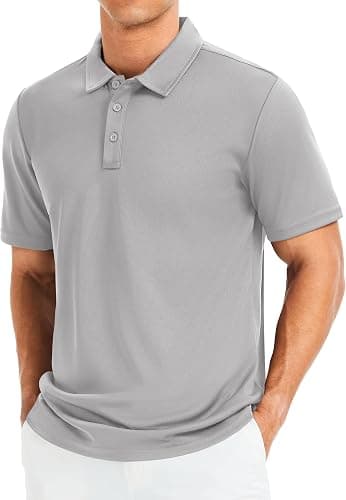
- Collar or collar stand: a small tonal mark that reads at conversational distance without shouting.
- Upper back, high across the shoulders: earns its keep on airport, hotel and station work.
- Left chest, small: keep it, but treat it as a doorstep detail rather than your main advert.
Working Around the Licensing Badge
Licensing authorities set their own conditions for drivers and vehicles, including whether a badge must be worn and how it must be displayed, and those conditions differ from one council to the next. Check the current rules with your own licensing authority and the guidance on GOV.UK rather than copying what a neighbouring borough does.
The uniform consequence is worth planning for. A badge on a lanyard swings into the wheel and scratches trim. A clip needs something firm to hold it, and a soft jersey polo sags into a permanent dimple under one. A woven placket, a badge tab or a firmer piqué holds a badge far better. Whatever you choose, do not let an outer layer cover a badge that has to stay visible.
Fabric for a Cabin, Not a Building Site
Cabs run hot in summer, cold at four in the morning, and swing between the two whenever a door opens. Poly-rich piqué and poly-cotton blends handle that better than heavy cotton, which goes clammy against a seat and stays damp. Crease recovery matters more here than in most sectors: a cotton poplin shirt looks creased by mid-afternoon, while a decent piqué polo looks much the same at hour nine as at hour one. If a shirt is non-negotiable for chauffeur work, budget for more garments in rotation.
“"Judge a driver's polo in the driving seat with the belt on, not on a hanger. Half of what you are paying to decorate is underneath the webbing."”
Which Decoration Method Suits a Fleet
Embroidery is the default for driver polos, softshells and caps because it survives constant washing and reads as professional rather than promotional. Fine detail and small text need simplifying first, so a logo with a tiny strapline will have to be redrawn. DTF handles detailed or full-colour marks with no per-colour setup and works on polyester and blends, which suits a small fleet. Screen printing is cheapest at volume but charges setup per colour. DTG is cotton only. Vinyl is the route for a driver's first name or a car number on individual garments.
Ordering When Your Drivers Are Self-Employed
Most private hire operators have a churn problem. Drivers join and leave, and a garment embroidered with someone's name is dead stock the week they go. Order to a size spread instead and hand kit out by role. The 50-piece minimum is per order with sizes mixed freely, so a seven-driver operation buying three polos each clears it in one run.
Consolidating also does the most for cost, because bulk discounts reach up to around 35% as quantity climbs. Production starts at artwork approval rather than order placement, and as guidance embroidery and screen printing run around 10 to 15 working days from that point, with UK tracked delivery usually adding 2 to 5 working days. Lay the design out on the garment in the free Design Studio, and watch pricing move in the instant calculator.