Custom Apparel for Hairdressing Chains
By The Velocity Wear Team
Need this made?Get pricing for this product— free, no obligation, 50 pieces minimum.
Two things break salon uniform at chain scale. Colour chemicals ruin fabric permanently, and independent branch ordering turns one look into five. Fix the second with a written specification and a single central order, and manage the first by accepting that stylist kit is a consumable and putting the protection on top of it.
No Garment Survives Bleach
Peroxide and lightener remove dye on contact. A splash on a black polo leaves an orange brown mark that no wash removes, because the colour is not sitting on the fabric, it has been chemically stripped out of it. Anyone selling you a bleach proof salon garment is selling you optimism.
That reality has two sensible answers, and most good salons use both. Put a proper tint resistant apron over the garment during colour work, so the apron takes the damage and gets replaced cheaply. And buy the garment itself at a price point that lets you replace it on a regular cycle without a difficult conversation. Trying to protect an expensive uniform from bleach is a losing battle.
Why Black Is the Hardest Colour to Reorder
Nearly every salon standardises on black, and it is the right call visually. It is also the colour where inconsistency shows most. Black is not one shade. Different mills, different fabric compositions and different dye lots all produce blacks that look identical in isolation and obviously mismatched hanging side by side. Add a season of washing and you get three visibly different garments in the same salon.
So lock the specification down to the garment code and the fabric, not just the word black. Order all branches together so the whole estate comes from the same production batch, and note the details somewhere central for next time. If you must top up mid year, expect a slight difference and rotate the new stock into a single site rather than scattering it across all of them.
The Real Cause of Multi-Site Drift
It is almost never a deliberate decision. It is a manager who needed four polos in a hurry, ordered locally, and picked something close enough. Repeat that across five sites over eighteen months and the chain no longer has a uniform, it has a family resemblance. Nobody ever approved it and nobody can easily undo it.
- Write a one page specification listing garment code, fabric, colour name, logo position, logo size and thread numbers.
- Order for every site in a single run so the whole chain comes from one batch.
- Set one annual ordering point and hold a central buffer instead of letting sites buy locally.
- Use vinyl for individual first names, so new starters are added without a fresh print setup.
- Keep the artwork files named clearly and stored centrally, not on one manager's laptop.
Tiering Without Making It Feel Like a Hierarchy
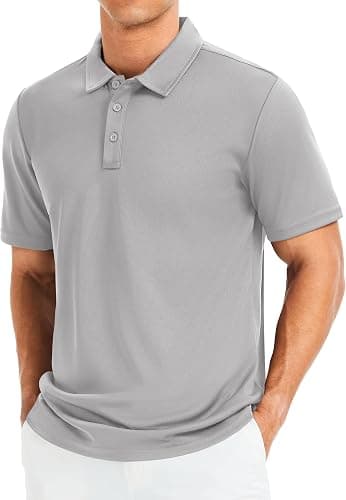
Most chains want some distinction between front desk, stylists and apprentices, but nobody wants a uniform that publicly labels who is junior. The subtle version works better: same colour throughout, different garment style. Front desk in a shirt or fine knit, stylists in a structured polo or tunic, apprentices in the same polo with a different apron. Clients read the difference without it feeling like rank.
It also helps operationally. A client looking for someone to book their next appointment can tell at a glance who is on the desk rather than mid colour service.
Decorating Kit That Gets Washed Constantly
Salon kit is washed after almost every shift, often warm, and it collects product residue, hair and colour. Embroidery handles that best because there is nothing on the surface to lift, and a small stitched logo on black reads as considered rather than promotional. Keep it small and keep the thread choice sensible. Metallic and very pale threads show soiling faster than a mid tone.
For aprons, print or vinyl is often better than embroidery, particularly on coated tint resistant fabrics where needle holes would compromise the coating. Aprons are also the natural place for a larger, more expressive version of the brand, since the garment underneath should stay quiet.
Ordering Across the Whole Chain
Consolidation is the whole game here. Minimum order is fifty pieces per order with sizes mixed freely, which a multi-site chain clears easily in one go, and discounts rise with quantity to around thirty five per cent as the total grows. Use the free price calculator to see how the number moves as you add sites and items. Production starts at artwork approval rather than order placement, so approve early, and allow around ten to fifteen working days for embroidery plus two to five working days for UK delivery after dispatch.
“"Five branches ordering their own black polos will end up with five different blacks, and not one of them will remember agreeing to it."”