Custom Apparel for Community Centres and Village Halls
By The Velocity Wear Team
Need this made?Get pricing for this product— free, no obligation, 50 pieces minimum.
A community centre has to clothe three different groups from one budget: paid staff who wear kit every day, regular volunteers who wear it weekly, and event helpers who wear it twice a year. The efficient answer is one design across three garment tiers rather than three separate designs, ordered in a single annual run so the whole thing benefits from the same bulk pricing.
Three Groups, One Identity
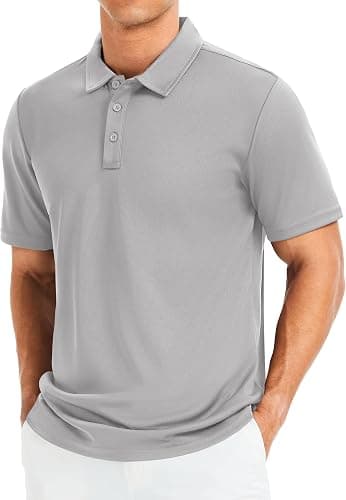
Paid staff and caretakers need durable daily kit, which means embroidered polos and a fleece or soft-shell for the parts of the building that are never warm. Regular volunteers running the lunch club or the coffee morning need something similar but cheaper and less frequently replaced. Event helpers need a visible tee they can pull on over their own clothes, and honestly nothing more.
The mistake is designing three different logos or three different colourways for those tiers. Use one mark, one colour, and let the garment do the differentiating. Visitors then read every one of those people as part of the same organisation, which is the entire point of branding a community building.
The Funder Logo Nobody Budgets For
If your kit is being paid for by a grant, read the funding conditions before you design anything. Many funders require acknowledgement on materials purchased with their money, and that often includes clothing. It is a reasonable requirement and it is also a cost, because a second logo means either a second embroidery position or an additional colour in a screen print, and screen printing charges setup per colour.
Plan it in from the start rather than bolting it on after approval. A funder logo on the right chest opposite your own, or on a sleeve, looks deliberate. The same logo squeezed in beside yours as an afterthought looks like exactly what it is. If you are unsure what your funding agreement requires, check the agreement itself and ask the funder directly rather than guessing.
Being Recognisable Is Part of the Job
Community buildings host youth sessions, older people's groups and services for vulnerable adults, and in all of those settings a visitor should be able to tell instantly who works there. That is a safeguarding-adjacent point and we are not the right people to advise on your policy, so check your own procedures and current official guidance. What we can say is that consistent, clearly branded kit makes the practical part of it easier, and that a plain role word on the back of a garment does more work than a logo on the chest.
Cold Halls, Car Parks and Practical Garments
Community halls are draughty and the heating budget is finite, so people wear coats indoors. Kit that only exists as a short-sleeved polo gets covered up all winter and stops doing its job entirely. Put the logo on the outer layer as well.
- Staff polo: embroidered, worn daily, replaced every couple of years.
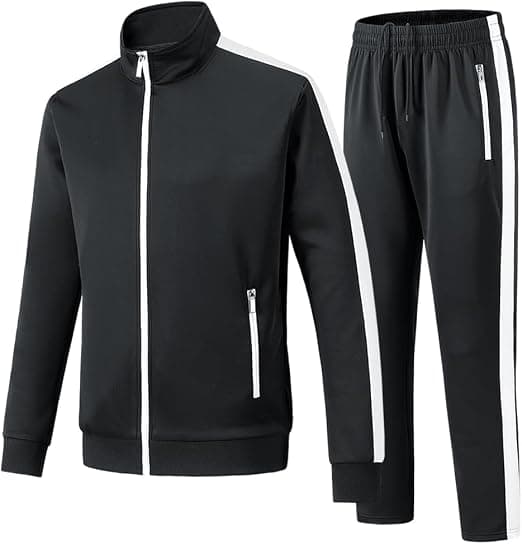
- Fleece or soft-shell: embroidered on the chest, because this is the layer people are actually wearing between November and March.
- Volunteer sweatshirt: warm, comfortable, and cheaper than a technical outer layer.
- Event tee: printed in one strong colour, sized generously so helpers can wear it over a jumper.
- Hi-vis for car park and event marshalling: keep it separate from your branded kit and follow current official guidance and your own risk assessment on when it is needed.
Simplify the Logo Before You Print It
Community organisations tend to have logos designed by a well-meaning volunteer, often with a gradient, five colours and a strapline in small italics. That mark is expensive on screen printing because setup is charged per colour, and it usually reproduces poorly in embroidery, where fine detail and small text need simplifying and anything under a few millimetres fills in.
Have a simplified two-colour version drawn up once. Keep the full-colour original for the website and the newsletter, and use the simplified version on everything wearable. It will cost less, stitch better, and after a year it will be the version people recognise anyway. DTF is the escape route if you genuinely need the full-colour original on a short run, since it carries no per-colour setup.
“"Design the two-colour version of your logo first. That is the one that ends up on everything that matters."”
One Order a Year, Sizes Mixed
Our minimum is 50 pieces per order with sizes mixed freely, which is what makes this workable for a centre with four paid staff and a rotating pool of volunteers. Combine the staff polos, the volunteer sweatshirts and the event tees into a single annual order and you clear the minimum easily while getting the benefit of bulk pricing, which reaches up to around 35% as quantities rise.
Order a slightly wider size range than your current team needs. Volunteers arrive unpredictably, and a spare 2XL on the shelf means the next person is kitted out on day one. Everything is briefed, proofed and ordered online, so the manager can model quantities in the free instant price calculator and preview layouts in the Design Studio without leaving the office.
Timing Around Grants and Events
Grant-funded orders often have a spend deadline attached, and production only starts at artwork approval rather than order placement. Screen printing and embroidery run around 10 to 15 working days from approval, with more complex jobs nearer 15 to 20, and UK delivery is typically 2 to 5 working days after dispatch on a tracked service. If your funding year ends in March or a summer fete is the target, count backwards and leave room for one round of proof changes, because there is always one.