Custom Apparel for Coffee Shops: What Actually Gets Seen
By The Velocity Wear Team
Need this made?Get pricing for this product— free, no obligation, 50 pieces minimum.
Coffee shop apparel is governed by two things that never change: an apron covers the middle of the garment, and a counter hides the bottom half of the person wearing it. Anything printed between the collarbone and the waist is invisible for most of the shift, so the branding belongs on the apron bib, the cap, the sleeve and the upper back. Velocity Wear produces cafe kit online from a 50-piece minimum per order, with sizes mixed freely and the layout previewed in the free Design Studio before anything goes to production.
Work Out Where the Logo Is Genuinely Visible
Stand on the customer side of your own counter and look at your staff. You can see heads, shoulders, the top few inches of chest and whatever is on the cap. Everything else is behind a bar, a grinder, a pastry case or an apron. Now watch a barista for two minutes: they spend a large share of the shift with their back to the room, pulling shots and steaming milk. The upper back is the most reliably visible surface in the building, and almost nobody prints on it.
That single observation changes an order. A modest embroidered mark on the apron bib, a clean cap front and a name or wordmark across the shoulder blades will do more for recognition than a large chest print that lives permanently under a canvas bib.
Milk and Espresso Attack From Opposite Directions
Steamed milk dries as a pale crust, so it shows on black and navy. Espresso and syrups stain dark, so they show on white and pale grey. There is no colour that hides both. Mid-tones, heathers and textured marls are the honest compromise, because they break up the surface enough that neither type of mark reads as a stain from a metre away. If your brand colour is very dark or very light, put it on the apron and keep the base garment in something more forgiving.
Treat the Apron as the Uniform, Not an Accessory
In most cafes the apron is the only garment every member of staff wears, every shift, in view of every customer. It also takes almost all the damage, which makes it the sensible place to spend money and the sensible thing to replace on a cycle. Heavier canvas and denim aprons hold an embroidered logo well and look considered; lighter twill is cooler in summer but shows wear faster. Cross-back straps beat a neck strap over an eight-hour shift, and staff will tell you so within a week.
Build a Size Pool, Not a Wardrobe Per Person
Hospitality turnover means personalised kit is usually wasted money. Order a pool of unisex garments across a spread of sizes, keep it in the back, and issue rather than assign. The 50-piece minimum applies per order rather than per size, so a five-person cafe can order a genuine size run in one go. Names, if you want them, are better on a reusable pin badge than stitched into a garment that will be handed to someone else in four months.
- Apron: the workhorse. Embroidered logo on the bib, ordered in the largest quantity because it wears out first.
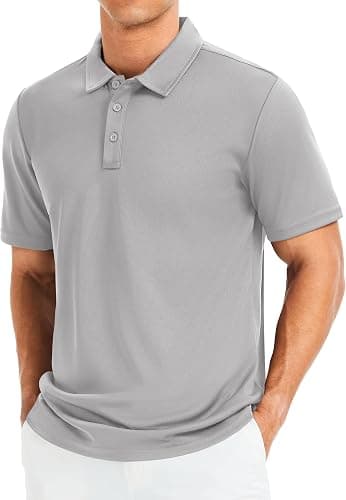
- Tee or polo: the base layer, mid-tone, branded on the upper back and sleeve rather than the chest.
- Cap: high visibility above the counter, but keep the design simple, because fine detail and small text do not stitch cleanly on a curved front panel.
- Mid-layer: openers arrive before the heating does. A branded sweatshirt for the 5am shift is the most appreciated item you will buy.
- Retail tee: a separate design, sold rather than issued, in a heavier weight than the staff kit.
Merch Only Works If It Is Not the Uniform
Regulars will buy a shop tee, but not if it makes them look like they work there. Use a different design for retail: the illustration, the neighbourhood reference, the roast name, something with a bit of personality, rather than the logo lockup that sits on the apron. Weight matters too. A very light tee reads as a giveaway, and a heavier one reads as a product someone chose to buy. That difference decides whether it gets worn in public or used for decorating.
Matching Decoration Method to a Cafe Order
Screen printing carries a setup cost per colour, so it is the cheapest route for a one or two colour wordmark once quantities rise, which suits a retail tee run. DTF has no per-colour setup and handles detailed or full-colour artwork on cotton, blends and polyester, which makes it the better fit for a short run of illustrated tees or for a small cafe ordering close to the minimum. Embroidery is the right answer for aprons, caps and any mid-layer that needs to look like uniform rather than promo, provided fine detail and very small text are simplified first.
“"The apron is the only garment in a cafe that is guaranteed to be seen, and it is the one most people forget to brand."”
Ordering Around Your Trading Year
Production starts at artwork approval rather than at order placement, so the proofing stage is where deadlines are won or lost. As qualitative guidance, screen printing and embroidery run around 10-15 working days from approval, and more complex jobs run nearer 15-20, with UK tracked delivery typically 2-5 working days after dispatch. Consolidating aprons, tees, caps and a retail run into one order also pushes you further up the bulk discount scale, which reaches up to around 35% as quantities rise. The instant price calculator shows what changing garment, method or quantity does to the number before you commit.