Custom Apparel for Churches and Faith Groups
By The Velocity Wear Team
Need this made?Get pricing for this product— free, no obligation, 50 pieces minimum.
Church and faith group apparel has three defining constraints: it is bought by volunteers with no budget, it has to fit a congregation spanning teenagers to people in their eighties, and it only works if people actually want to wear it. That is why a 50-piece minimum with sizes mixed freely across the run matters more here than almost anywhere else, and why understated embroidery beats a giant chest logo every time.
Work Out Who Actually Needs to Be Identifiable
The instinct is to kit everybody out. It is also the fastest way to spend a whole year of budget on garments that half the people never wear. The useful question is narrower: who does a visitor need to be able to find? That is usually the welcome team at the door, stewards during a service, whoever is running the café, the children and youth team, and the sound and vision desk.
Kit those roles well and leave everyone else out of it. A dozen people in consistent polos looks more organised than eighty in mismatched tees, and costs a fraction as much. You can always extend later; you cannot un-buy eighty tees.
The Size Range Is the Real Constraint
A congregation is not a workforce. You are covering XS to 5XL, teenagers on the tech desk and retired stewards, in the same order. This is exactly where our minimum works in your favour: it is 50 pieces per order, not 50 per size, so you can order one of almost everything and still meet it.
Offer more than one garment shape on the same design. Some volunteers want a longer sleeve, a higher neckline or a looser cut, whether for comfort, modesty or simply because a fitted polo is not for everyone. Running the same embroidered logo across a unisex polo, a women's fit polo and a soft-shell means the team still looks consistent while everyone gets something they will genuinely wear.
Tone: Small Logo, Clear Role
This is the mistake worth avoiding. A church logo blown up across the whole chest reads as advertising, and volunteers who feel like a billboard tend to leave the garment at home. The version that gets worn is a small left-chest embroidery with the role in plain type across the back or the shoulders. WELCOME on the back of a polo tells a visitor everything they need to know at ten paces without anyone feeling like a walking poster.
Keep the wording functional rather than promotional. Role first, organisation second. It works better for the visitor and it is more comfortable for the person wearing it.
Garments for a Cold Porch and a Warm Hall
Buildings vary enormously and volunteers stand still for long periods, which is different from working in them. A door steward in a stone porch in January needs a fleece or soft-shell, not a polo. A café volunteer in a warm hall needs the polo. Youth workers want a hoodie because that is what the young people will take seriously.
- Welcome and café team: embroidered polo in a colour that stands out against the building interior, not against the carpet.
- Door stewards: fleece or soft-shell, embroidered, because standing in a draught for an hour is the actual job.
- Children and youth team: hoodie or sweatshirt, since it needs to look normal rather than official.
- Tech and AV: dark and plain, because they work in low light at the back and do not want to be conspicuous.
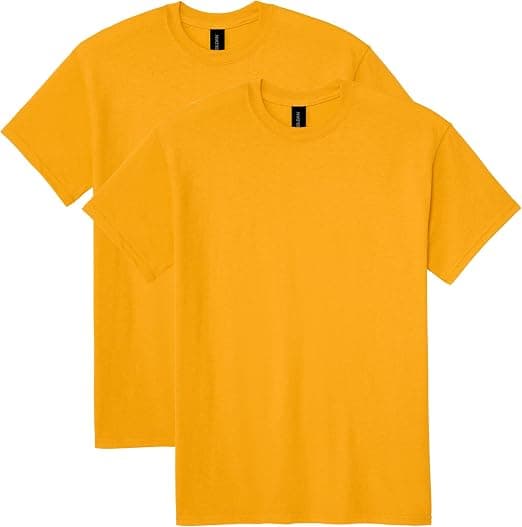
- Holiday club and outreach: a printed tee in a single strong colour, ordered in one batch and treated as disposable after a few summers.
Do Not Embroider Names
Volunteer teams rotate constantly. Someone joins the welcome rota for a year, then moves away or moves to a different team. A named garment is worthless the moment that happens, and it is the single most common way faith groups waste money on apparel.
Keep garments role-based and reusable, and put names on badges or lanyard cards that cost almost nothing to replace. When someone steps down, the polo goes back into the box and fits the next volunteer. Over five years that is the difference between buying kit once and buying it three times.
“"Kit that goes back in the box when a volunteer moves on is the only kit a church budget can actually afford."”
Making a Small Budget Go Further
Two levers matter. The first is quantity: bulk discounts reach up to around 35% as the order grows, so one annual order covering every team beats four separate ones through the year. If your building shares volunteers with a linked church or a partner charity, combining orders is worth the phone call.
The second is longevity. Embroidery costs more up front than print and lasts several times longer on a polo washed weekly, which makes it cheaper per year of use. For a genuinely disposable item such as a holiday club tee, print is the right call. Compare both in the free instant price calculator, and lay the design out in the free Design Studio before anyone signs it off.
Ordering Ahead of Summer Programmes
Holiday clubs, missions and summer festivals all land in the same few weeks, and they are all planned months ahead, so there is no excuse for a rush. Production starts at artwork approval, not order placement. Screen printing and embroidery take around 10 to 15 working days from approval, with more complex jobs nearer 15 to 20, and UK delivery is typically 2 to 5 working days after dispatch. Get the design agreed in spring, place one order covering the whole summer, and you will spend the season running the programme rather than chasing shirts.