Cotton vs Poly-Cotton Workwear: Which Fabric Holds Up?
By The Velocity Wear Team
Need this made?Get pricing for this product— free, no obligation, 50 pieces minimum.
Poly-cotton holds its shape, colour and size through heavy washing, which is why most staff uniforms use it. Pure cotton is more comfortable in heat, feels better against skin, and is the safer choice near flames or sparks because it chars instead of melting. Choose on the working environment first, comfort second, price last.
What the Blend Ratio Actually Changes
Most workwear poly-cotton is 65/35 or 50/50. The polyester supplies strength, shape memory and colourfastness. The cotton supplies softness and breathability. Push the polyester up and you get a garment that comes out of the wash looking ready to wear and stays the size you ordered. Push the cotton up and it gets more comfortable and less predictable.
The practical difference shows up after twenty washes, not on day one. A 100% cotton work shirt fades, softens and shrinks a little. A 65/35 shirt from the same batch will still be roughly the colour and size it started as. For a uniform where everyone is supposed to look the same, that consistency is the entire point.
Shrinkage Is the Complaint You Will Hear First
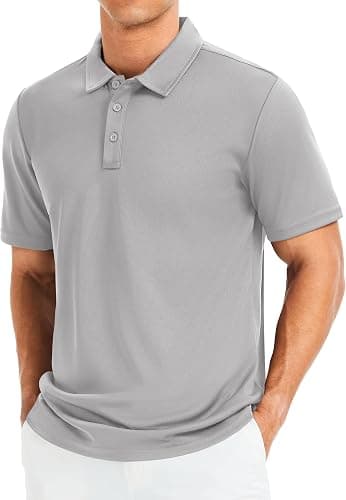
Cotton shrinks, mostly on the first few washes and mostly in length. If someone orders a perfectly fitting cotton polo and washes it hot, the sleeves and body come back shorter. Nobody blames the wash cycle. They blame the supplier. Poly-cotton moves far less, which quietly removes a whole category of complaints from your inbox.
The Safety Case for Cotton Is Not Negotiable
Polyester melts. Near welding, grinding, foundry work, hot works or anything producing sparks and molten metal, a synthetic fabric can melt and stick to skin, which turns a burn into a far worse injury. In those environments the standard is treated cotton or a purpose-made flame-resistant fabric, not a poly blend, and the garment needs to be certified for the hazard. If your work involves any of that, check current requirements on GOV.UK and with your safety adviser before choosing a fabric, and buy garments certified for the specific risk rather than assuming a blend will do.
- Cotton wins when staff work in heat, the garment sits against skin all day, comfort decides whether people actually wear it, you are printing with DTG, or a softer natural look suits the setting.
- Poly-cotton wins when garments are washed constantly and hot, uniformity across a team matters, colour needs to hold, cost per garment is tight, or the kit is worn over other layers.
- Cotton downsides: shrinks, creases, dries slowly, fades, and wears through at high-friction points faster.
- Poly-cotton downsides: pills over time, holds odour more than cotton does, feels warmer in still air, and is the wrong answer near flames or molten metal.
- Neither is a substitute for certified PPE. Where a real hazard exists, the certification decides the fabric, not preference or price.
Decoration Behaves Differently on Each
DTG only works properly on cotton, so if you want a soft full-colour print on a work shirt, cotton it is. DTF prints happily onto cotton, blends and polyester, which makes it the flexible option when your range mixes fabrics. Sublimation needs polyester and light bases only, so it is out for both of these except on high-polyester sports kit. Embroidery is content on either, and on poly-cotton it tends to sit slightly crisper because the fabric holds its shape under the needle.
One thing worth knowing: a print on high-polyester fabric can suffer dye migration, where colour from the fabric bleeds up into the print and a white logo slowly turns pink on a red shirt. A 65/35 blend is far less prone to this than pure polyester, but it is a reason to be careful with strongly dyed synthetic garments and light artwork.
Comfort in Real Conditions
In a warm kitchen or a summer warehouse, cotton is noticeably more pleasant because it absorbs moisture rather than holding it against the skin. In cold or damp conditions that same absorbency works against you: wet cotton stays wet and cold. Polyester content dries faster. If your team works outdoors in British weather, drying speed matters more than the softer hand-feel does.
“"Comfortable uniform gets worn. Uncomfortable uniform sits in a locker with your logo on it."”
The Right Answer for Most Teams
For the majority of staff uniform, which is polos, work shirts and t-shirts worn in offices, shops, warehouses and vans, 65/35 poly-cotton is the sensible default. It survives industrial washing, keeps the team looking consistent, and costs less. Choose 100% cotton where comfort decides whether people wear the kit at all, or where a hot working environment makes it the safer option. Minimum order is 50 pieces per order with sizes mixed freely across the run. If you are unsure, order your first run in one fabric and add the alternative on the reorder rather than splitting an untested batch two ways.