What Charities Pay for Branded Clothing
By The Velocity Wear Team
At the 50-piece minimum, a charity pays from $13 for a t-shirt, $12 for a cap, $18 for a polo, $22 for joggers and $31 for a hoodie, with decoration included in the piece price. Those rates fall as quantity rises, by up to 35% at the top tier, which is the single biggest lever a fundraising order has.
What does a charity pay per garment?
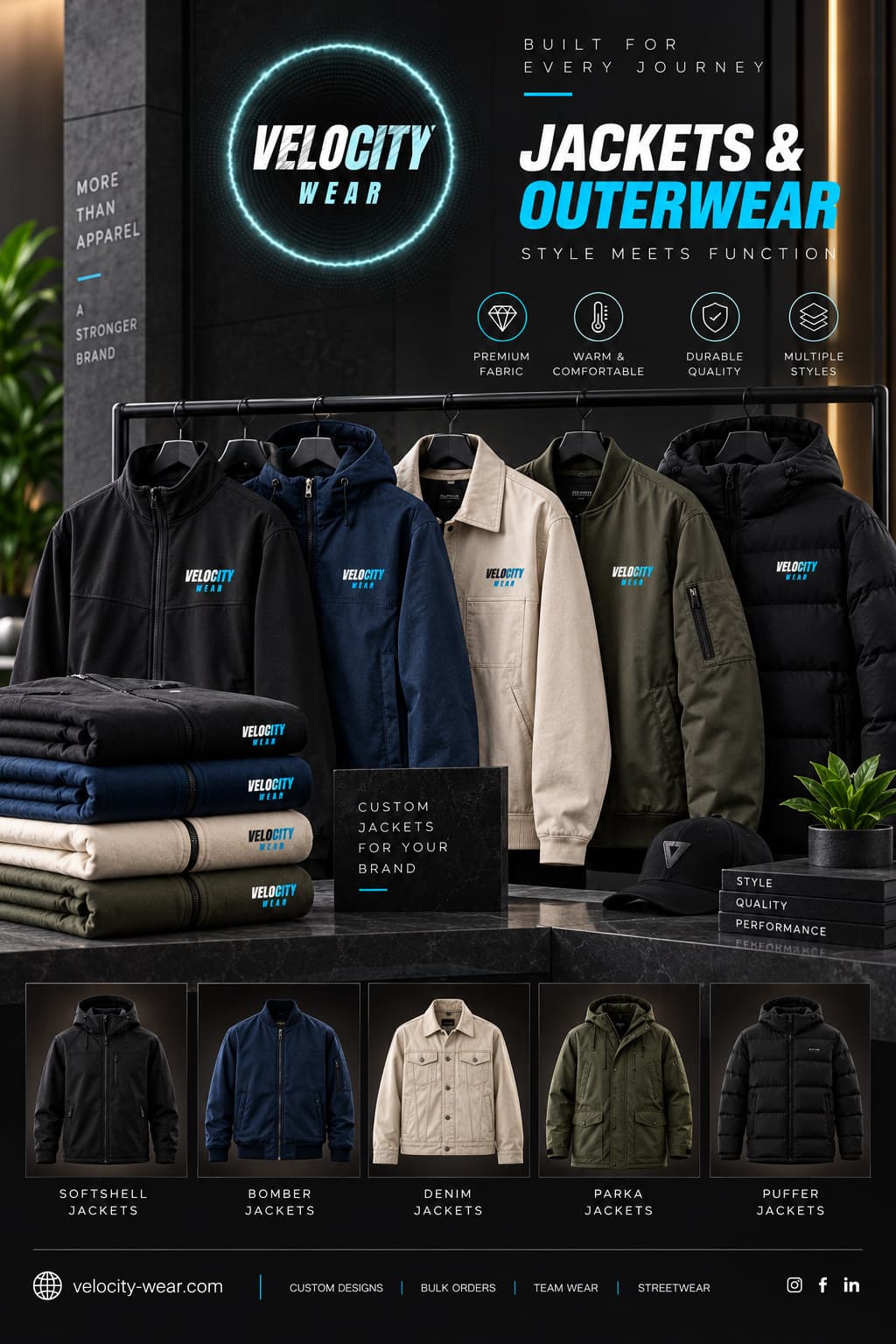
The from-price depends entirely on the garment, not on the cause or the complexity of the logo. Tees sit at the bottom of the range and hoodies near the top, with polos and joggers in between. Jackets, towels, bottles, keychains and polythene bags are quoted per job rather than carrying a published starting figure. Our charities and fundraising page covers the range, and the wholesale page explains how each product is priced.
Uniform-style corporate pieces start from $20, which is often the right choice for staff and long-term volunteers who wear the kit weekly rather than once at an event. Denim jackets from $38 and tracksuit sets from $53 sit at the upper end and rarely suit a fundraising run.
How does the unit cost compare with what a shirt raises?
That is the arithmetic that decides the order, and it is worth doing before the design. A tee bought at the entry rate and sold or sponsored at a typical fundraising price carries a clear margin; the same tee bought at 50 pieces and sold to twenty people does not. Volume is what makes a fundraising garment work, both because the unit price falls and because the fixed effort is spread further.
Run the numbers on the quantity you are confident of moving, not the quantity you hope to. A charity that sells out of 200 and has to say no has done better than one that orders 500 and stores 300 in a back office for two years.
Where can a fundraising order save money?
In three places, none of which involve compromising on the garment itself.
- Fewer designs. The minimum is 50 per design, so one shirt worn by staff, volunteers and supporters costs a third of three separate versions.
- Higher quantity in one run. The tiers step at 50, 100, 250, 500 and 1,000 pieces, reaching 35% off the entry rate at the top.
- Simpler decoration. Fewer print colours and one print position rather than three keeps the piece price at the lower end of its range.
- A timeless design. Artwork without a year on it can be reordered, carried into the next campaign and sold long after the event.
There is more detail on the practical side of a fundraising run in our guide to custom apparel for charities and nonprofits.
What should volunteer kit cost to replace?
Volunteer kit should be costed as a recurring line rather than a one-off purchase, because volunteers rotate and garments wear out. A tee at the entry rate is cheap enough to replace annually; a heavier piece is not, and should be treated as issued property that comes back or gets logged.
For organisations running the same kit year after year, the strongest position is a single large annual order rather than several small ones. It reaches a better tier, arrives in one dye lot so volunteers match, and removes repeated administration from people whose time is the scarcest resource the organisation has. Our general breakdown of what custom clothing costs sets out the same variables outside a fundraising context.
One last practical note: a physical sample costs £150 and is credited against the bulk order. On a garment that will be sold to supporters, that check is worth building into the budget from the start rather than deciding about it late.
Separate the garments people are given from the garments people buy. Volunteer kit is issued, worn hard and replaced on a schedule, so it should be chosen for durability and cost per wear. Supporter garments are bought voluntarily, which means the fit, the weight and the design have to be good enough that somebody would pay for the same thing without a cause attached to it.