Ounces or Grams? Reading Fabric Weight Like a US Buyer
By The Velocity Wear Team
This is a small thing that causes a disproportionate amount of confusion. Fabric weight is the single most useful number in an apparel specification, and the US and the rest of the world express it differently — ounces per square yard in America, grams per square metre almost everywhere else. Two people can agree completely on a garment and disagree entirely on the number describing it.
The conversion
One ounce per square yard is roughly 33.9 grams per square metre. So to go from GSM to ounces, divide by about 34; to go the other way, multiply by about 34. That is close enough for any conversation that is not a lab report.
Some worked examples, since the arithmetic is easier with real numbers attached. A 240 GSM tee is about 7 oz. A 180 GSM tee is about 5.3 oz. A 380 GSM fleece is about 11.2 oz, and a 450 GSM fleece is about 13.3 oz.
What the numbers feel like
- Around 4 to 4.5 oz (140–150 GSM) is a lightweight tee. Drapes well, breathes, shows the body, and will be semi-sheer in white. Popular for fashion fits and for hot climates; disappointing if the customer was expecting substance.
- Around 5 to 5.5 oz (170–190 GSM) is the standard mid-weight tee. It is what most people picture when they think "t-shirt".
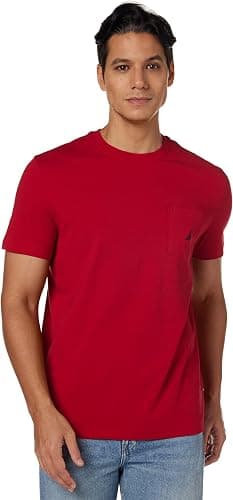
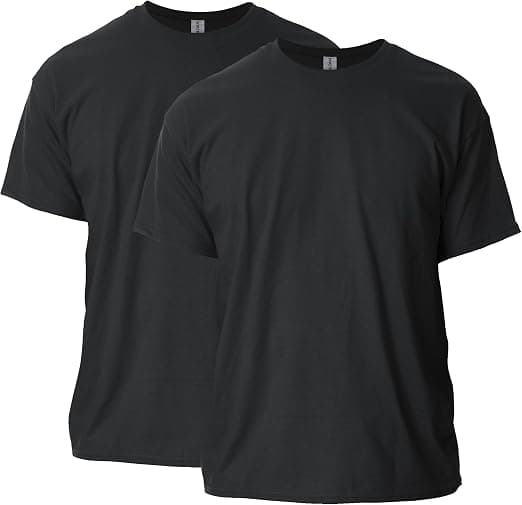
- Around 6 to 7 oz (200–240 GSM) is a heavyweight tee. It holds its shape, hangs squarely off the shoulder, and is the weight the current boxy fits are built on.
- Around 8 oz (270 GSM) and up in a tee is genuinely heavy — structured, opaque, and increasingly a statement about construction rather than a comfort choice.
- For fleece, 300 GSM (about 9 oz) is a light hoodie, 380 (11 oz) is a good midweight, and 450 (13 oz) is a proper heavyweight that will feel expensive in the hand.
Weight is not quality
It is worth saying, because heavyweight has become shorthand for premium and it is only half true. A heavy shirt made from coarse open-end yarn is heavy and cheap-feeling. A lighter shirt made from combed ring-spun cotton with a tight knit can feel considerably better on the body and take a much cleaner print.
The three numbers that actually describe a knit are weight, yarn type and yarn count. Weight alone tells you how much fabric is there, not how good it is. Ask for all three.
Why it matters for printing
Heavier, denser fabric gives ink a better surface. A fine screen print on a light open knit will show the texture through it, and small text especially will lose crispness. On a heavier combed cotton, the same artwork sits cleanly on the surface.
This is a real design constraint rather than a preference. If your artwork has fine detail or small type, the blank choice affects whether it reproduces, and it is better to know that at artwork stage than at sample stage.
Speak your customer's language
On a product page for a US audience, publish ounces. On one for a UK or European audience, publish GSM. Publishing both costs you nothing and removes a translation step for whoever is reading, which is the whole job of a spec on a product page.
Our tees are 240 GSM ring-spun — about 7 oz — and our fleece runs 380 to 450 GSM, roughly 11 to 13 oz. Quote whichever number your buyer thinks in.