Worldwide Delivery for Custom Clothing: What to Plan For
By The Velocity Wear Team
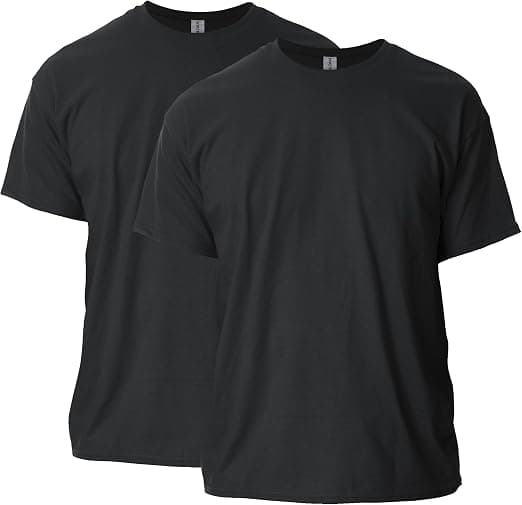
Need this made?Get pricing for this product— free, no obligation, 50 pieces minimum.
Velocity Wear delivers custom apparel worldwide on a tracked service. Production timelines are unchanged by destination, but international transit is longer and less predictable, and import charges are determined by the destination country — so plan with wider margins and check current official guidance for your destination.
What Changes and What Does Not
Production is the constant: around 10–15 working days from artwork approval for screen printing and embroidery, or nearer 15–20 for sublimation and complex jobs. What changes is everything after it. Transit takes longer than the 2–5 working days typical domestically, customs processing introduces variability nobody controls, and a correction after dispatch is far more costly to resolve. The order itself is no more complicated; the tolerances are tighter.
Planning Around a Fixed Date
For anything tied to an event, a season or a launch, the arithmetic needs genuine contingency rather than a tight calculation. Work backwards: the date, a wide transit window, production time, a realistic proofing allowance, and time to collect artwork and make decisions before that. If sponsor or partner logos are involved, add more — they are the most common cause of delay on any deadline-driven order, and they cannot be chased effectively across time zones at short notice.
Import Charges
Duties and taxes are set by the destination country and are typically the importer's responsibility, which usually means the recipient. Rates, thresholds and procedures vary by country and change over time. Rather than working from general summaries, check current guidance for the specific destination — GOV.UK for exporting from the UK, and the destination's own customs authority for what applies on arrival. Take proper advice if you are importing commercially or regularly.
Consolidate Aggressively
The case for fewer, larger orders is stronger internationally than domestically.
- Each shipment carries its own transit time, customs process and uncertainty — multiplying orders multiplies all three.
- Bulk discounts reach up to around 35% as quantities rise, so consolidation is cheaper per piece as well as simpler.
- A single larger order for a season or a year avoids repeated exposure to customs delays at inconvenient moments.
- Ordering a buffer for expected growth or replacement costs far less than a small top-up shipment later.
Address and Documentation Details
Small details cause disproportionate problems internationally. Confirm the delivery address in the destination's own format, including postal code conventions and any unit, floor or building details that domestic addresses might omit. Keep your own record of what was ordered and its value, since that is what customs processes work from and what you will need if anything requires clarification.
“"Domestically you can fix a mistake in a week. Internationally you can fix it in a month, if you are lucky with customs."”
Reducing Risk Before Dispatch
Because corrections are expensive once a shipment has left, front-load the care. Preview placement and scale in the free Design Studio, check the proof carefully against your written specification rather than glancing at it, and remember production starts at approval. For a new specification going to an international destination, ordering a small run first at the 50-piece minimum with mixed sizes is worth the extra time — it is far better to discover a problem on fifty pieces than on a full order that has already cleared customs.