Size Splits for a Bulk Tracksuits Order
By The Velocity Wear Team
Sizes mix freely inside the minimum of 50, so a tracksuit order can be split however your group falls with no surcharge for an awkward spread. That freedom is also the risk: nobody else is going to correct a bad curve. The reliable method is to collect real sizes with a deadline, then order to what came back.
Should you survey or estimate?
Survey, whenever the wearers are known people rather than future customers. A form with a deadline and a default answer returns a better curve than any generic distribution, and it also makes the order somebody else's decision if a size turns out wrong. For sets being sold rather than issued, your own past sales are the only data worth using.
Where returns are patchy, weight the unknowns towards the middle and upwards rather than downwards. Sets are worn loose and over other layers, so a slightly large set gets worn and a slightly small one does not.
Why is a co-ord harder to size than a hoodie?
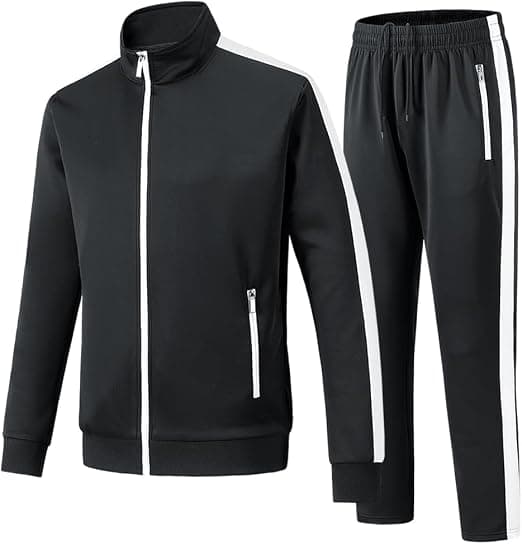
Because a set is sized as a set. A buyer who takes a large top and a medium jogger is not a customer a matched co-ord can serve, and you cannot break one set to rescue another. That makes the extremes of the curve more expensive to get wrong than they would be on a single garment.
For resale especially, keep the tails thin and the middle deep. Apparel sizing and fit covers what an over-optimistic curve does to returns, and how garment sizing is graded explains why sizes step the way they do.
How much spare should you order?
Enough to cover the wrong answers on your own form, and no more. A handful of middle sizes held back is useful; a deep buffer across every size is a second problem in a cupboard. Remember that a top-up is a fresh order of fifty for that design, so the decision is between a few spares now and a full run later.
Organisations with steady turnover usually build the spares into the first run deliberately. The size options for each product sit on the wholesale tracksuits page, and quantity tiers on the pricing page.
Does the split affect the price?
No. Fifty sets is fifty sets whether they are all one size or spread across the whole range, and the tiers of 50-99, 100-249, 250-499, 500-999 and 1,000 or more are counted on total quantity, reaching up to 35% off the fifty-set price. Only the total moves the unit cost.
How do you tell people what to ask for?
Publish the measurements, not just the letters. A medium means different things to different people, and a chest and inside-leg figure settles an argument that a size label starts. Circulate those numbers with the sign-up form so the answers you get back mean something.
If you have a sample, use it as a fitting garment. Passing one set round an office or a changing room for a day produces a better curve than any form, because people try it rather than estimating.
Say clearly that custom kit cannot be exchanged like retail stock. Made-to-order sets are produced to the split you submit, so the size someone picks is the size they get, and knowing that in advance makes people read the measurements.
Keep the completed form somewhere you can find it again. A second run is far easier to weight correctly when you can compare what people said they wanted against what actually had to be swapped, and that record is the only version of the truth you will have a year later.