Delivery Times for Wholesale Tracksuits
By The Velocity Wear Team
Production runs 10 to 15 working days from artwork approval, and delivery transit sits on top of that. For a fifty-set tracksuit order the practical answer is three to four weeks door to door in the UK, a little longer into the USA and mainland Europe. The clock starts at approval, not on the day you ask for a quote.
What happens during the 10 to 15 working days?
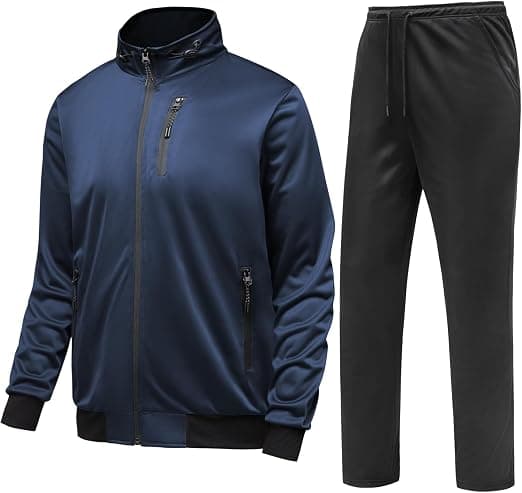
Fleece is cut, the top and the jogger are sewn, decoration is applied, labels go in, and the sets are finished and bagged. A co-ord is two garments, so fifty sets is a hundred pieces through the line. That is why the window is quoted as a range: a single embroidered chest mark clears faster than a full front screen print plus numbered joggers. The tracksuit sets page lists the decoration routes that feed into it.
Nothing in that window covers the back and forth before approval. Artwork revisions, a size run still being collected and an unpaid deposit all sit outside it. Buyers who treat the quote date as day one are usually a week adrift by the time the order is genuinely released.
What decides the transit time after production?
Destination and method. UK deliveries are the shortest hop. The USA and mainland Europe add customs clearance, and a larger consignment moves differently from a couple of cartons. We deliver across the UK, the USA and Europe and invoice in seven currencies, so paperwork is often the slower half rather than the freight itself.
Volume changes the shape too. Fifty sets is a small consignment. A thousand sets is freight, and freight books to a schedule rather than leaving whenever it is ready. If your quantity sits in the upper bands on the tier pricing, ask for the dispatch window at quote stage instead of assuming it matches a small run.
One habit saves a week more often than anything else: confirm the delivery address and the receiving hours when you place the order rather than when the sets are ready. A consignment arriving at a site with nobody there to sign for it goes back to a depot, and a second attempt can cost two or three days on top of a transit that otherwise ran perfectly.
What actually delays a tracksuit order?
- Artwork supplied as a low resolution image rather than vector, which has to be redrawn before anyone can approve it.
- A Pantone reference added after approval, which restarts the colour sign-off.
- Size splits that change once cutting has begun.
- A sample requested in the middle of a run instead of before it.
None of those are production problems. They are decision problems, and they are why two identical orders can land a fortnight apart. Taking the £150 sample early, before the bulk run is scheduled, removes the biggest one. The fee is credited against the bulk order, so it costs nothing extra once you go ahead.
How do you plan around a date you cannot move?
Count backwards and add a buffer. Take the date the sets must be in hand, subtract transit, subtract 15 working days for the build, then subtract the days you will spend on artwork and size collection. Place the order before that date rather than on it. Planning lead times so you never air freight works through the arithmetic properly.
For a fixed event date, stop treating the minimum lead time as the plan. It is the floor. Anything that lands exactly on the floor has no room for a remake, and a remake on a co-ord means rebuilding two garments instead of one. Apparel production lead times explained covers why the range exists in the first place.