Restaurants: Ordering Tracksuits in Bulk
By The Velocity Wear Team
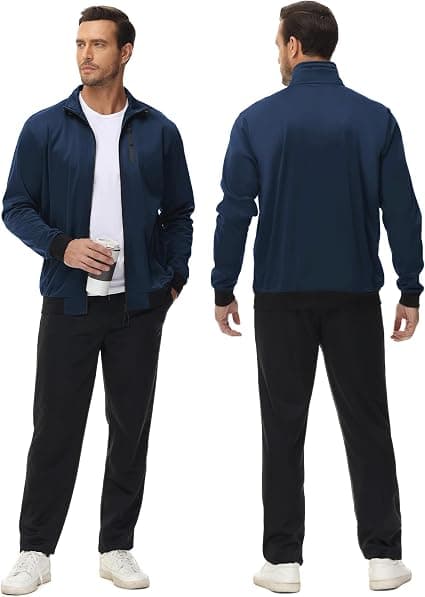
Tracksuits are $53 per set at the 50-piece minimum, a set being the hooded top and its matching jogger. In hospitality they rarely serve as service uniform. They work as delivery kit, as prep and setup wear, as staff clothing between shifts and as branded merchandise, and the fabric choice follows from which of those you are actually buying for.
A restaurant is two workplaces sharing a roof. The front has a dress code and a customer looking at it. The back has heat, movement and things that stain. One garment cannot be right for both, so the first decision is which section the order is for. The wholesale tracksuits page has the specification, and the restaurants and hospitality page covers the wider uniform picture.
Where does a tracksuit fit in a hospitality team?
Most usefully at the edges of the shift. Delivery riders and drivers wear branded sets because they are seen in public and the kit needs to be warm and identifiable. Prep and setup crews wear them before service starts. Staff heading in and out of a venue wear them because a branded set is visible marketing at no extra cost. During service itself, most kitchens and floors have more specific requirements, which is where the garments covered in staff uniforms for restaurants and cafes take over.
What do heat and stains do to the fabric choice?
They push you towards darker colourways and away from anything that shows every mark. A set worn near heat needs to be comfortable when the wearer is warm, which argues for the lighter of the two fabric characters rather than the heaviest available. Whatever you choose, expect hospitality kit to be washed far more often than office clothing, so the decoration method matters: a small embroidered mark outlasts a large print on a garment that lives in a washing machine.
How many sets does a rota actually need?
More than the headcount, and that catches people out. Hospitality rotas rotate, staff turn over, and a set in the wash is a set not available for a shift. A venue with thirty people on the rota does not order thirty sets; it orders enough that each regular wearer has a spare and there is stock left for new starters. Since the minimum is 50 sets per design anyway, most single-site restaurants find the arithmetic works out naturally.
What does kitting out both sections cost?
If both sections wear the same design, it is one run and one price. If they need different designs, it is two runs of 50 and two decoration set-ups, which is a significant step up for a single venue. Groups with several sites are in a better position: one design across all of them can reach the higher quantity bands, which run 50 to 99, 100 to 249, 250 to 499, 500 to 999 and 1,000 upward, with savings reaching up to 35% off the 50-set price. Matching across the two halves of a set is a production question rather than a styling one, and custom tracksuits and matching sets explains why buying them as a set matters.
Plan the quantity around turnover rather than current headcount. Hospitality teams change more often than most, and a branded set issued only to people who have passed probation lasts longer and costs less to administer than one handed to everybody on day one. Keep the surplus from the run as issue stock, log it, and reissue what comes back where that is practical. Because a repeat is another 50 sets and another 10 to 15 working days from artwork approval, the venues that manage stock deliberately are the ones that go two or three years between runs.