How Sports Clubs Buy Joggers Wholesale
By The Velocity Wear Team
Club joggers start at $22 a pair at the fifty-piece minimum, and most clubs clear fifty across seniors, juniors and coaching staff without trying. The complications are political rather than technical: whose logo goes where, whether members pay or the club subsidises, and whether the order lands before the first fixture or after it.
Who pays, and what does that change?
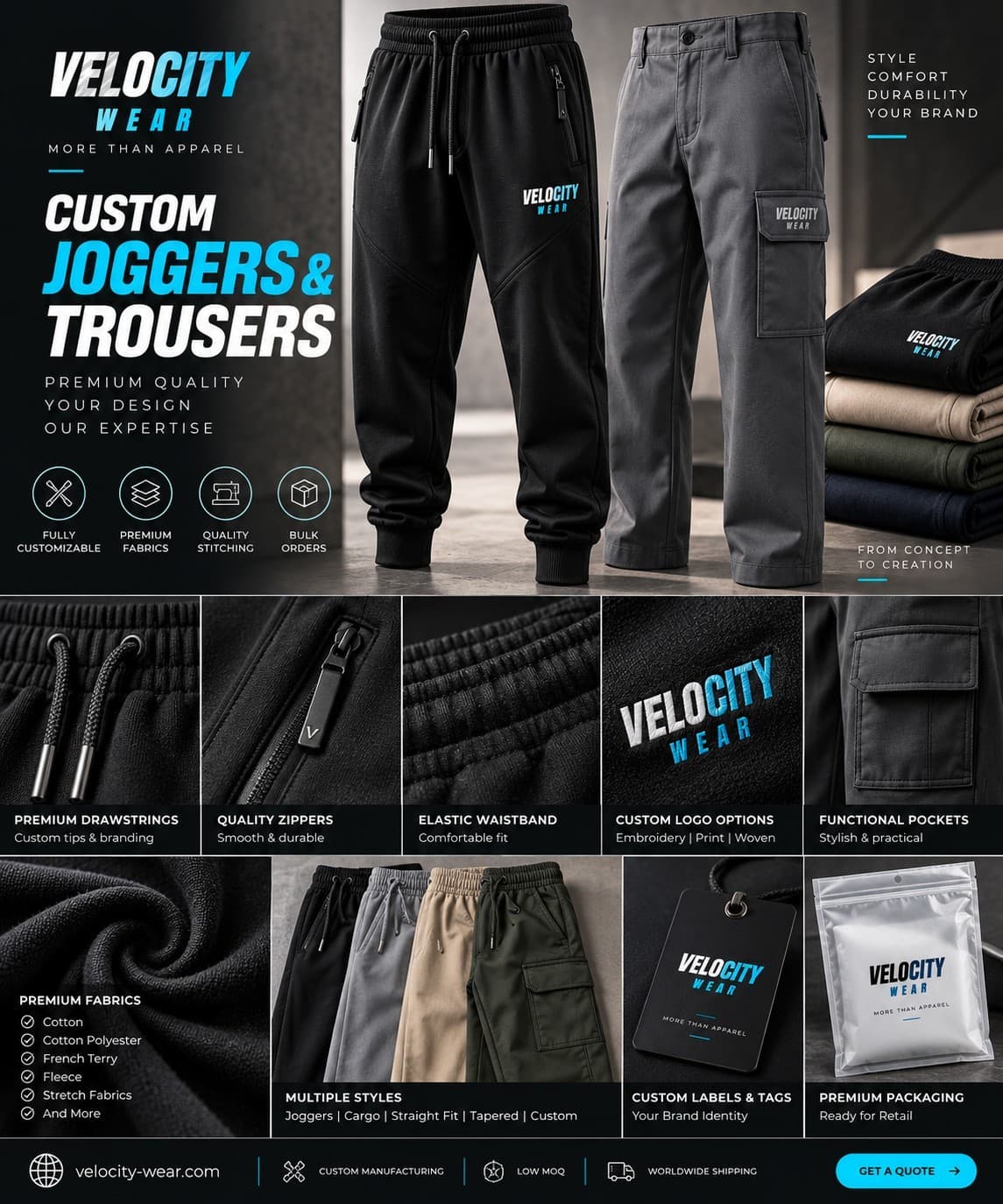
Three models turn up. The club buys the run and issues it as kit; the club buys and sells on to members at cost or with a margin; or members pre-order and the club places a single order against confirmed payments. The third is the safest for a committee with no reserves, and it is the one that most often misses the season start, because collecting money from eighty people takes longer than anyone plans for. The wholesale joggers page has the specifications, and the sports club pages cover how a full kit order is usually structured.
Whichever model you use, set a payment cut-off that is two weeks earlier than feels necessary. Production is 10 to 15 working days from artwork approval, and approval cannot happen while the numbers are still moving.
Can we put squad numbers and sponsor logos on?
Sponsor logos, yes — a thigh position is the usual home, clear of the seat and the knee where wear is worst. Squad numbers are possible but they change the nature of the order, because every pair then carries different artwork and the list has to be final before approval. A club that adds two late signings after sign-off restarts the clock for everyone.
Where a sponsor is paying for the kit, get their artwork early and in a usable format. Sponsor files arrive as low-resolution images more often than not, and redrawing one is a step that has to happen before production, not during it.
Cuffed or open hem for a club?
Cuffed for anything worn on the pitch side or in a warm-up, because the hem stays clear of studs, mud and wet grass. Open hem suits a leisure or travel pair worn over trainers, and it photographs better on older squads. A club ordering one design takes cuffed and rarely regrets it.
Fabric follows the same split. Brushed fleece is the warmer option for touchline and winter training; loopback is lighter and dries faster, which suits a squad that trains in them. If the joggers are half of a matching set, custom joggers, sweatpants and tracksuit co-ords covers how to build the pair so the two pieces actually match.
How do you hit the season start?
Count backwards from the first fixture, not from the first training session. Transit, then 15 working days of production as the outer figure, then approval, then the sponsor's artwork and the member list. That lands most clubs ordering in the early summer for an autumn season, which is exactly when committees are least active.
A sample at £150, credited against the bulk order, is worth it on a first run so the committee can see the colour against the shirt before eighty pairs are made. Clubs repeating last year's design can skip straight to production. Club hoodies for UK sports clubs goes through the committee side of these orders in more detail.