Joggers for Clothing Brands, Ordered Properly
By The Velocity Wear Team
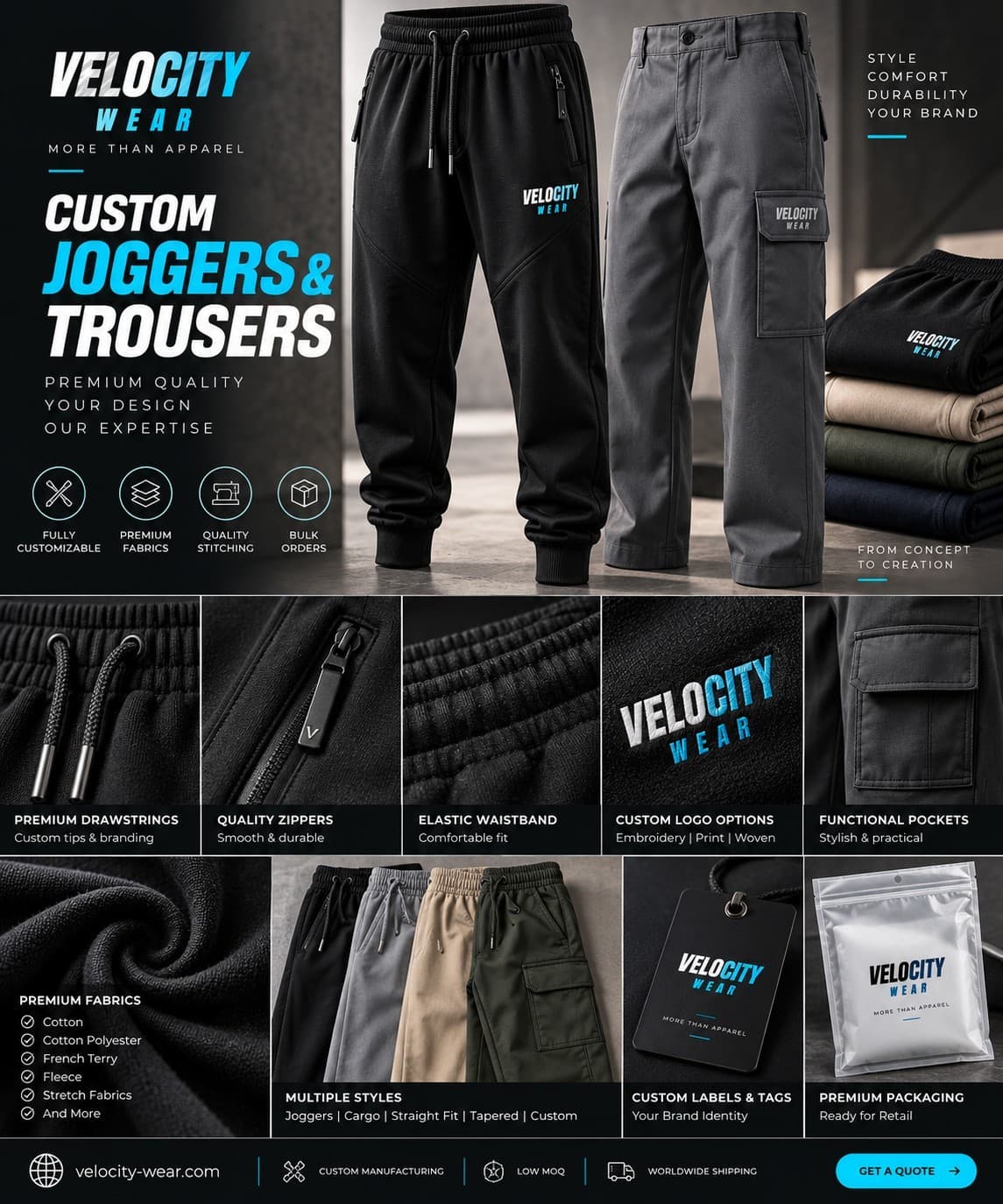
Joggers for a clothing brand start at $22 a pair at the fifty-piece minimum, and the price is the easy part. What decides whether the product reads as a brand is private label: a custom woven neck label, a tear-out label, a swing tag and packaging that matches the rest of the line. Without those, you are reselling a printed blank at a brand price.
What does a first drop actually cost to land?
Start with $22 a pair at fifty and work down through the tiers as the quantity rises, up to 35% off that fifty-piece figure at the top of the scale. Add the private label elements, add delivery, and add the £150 sample credited against the bulk order. The landed cost per unit is what your retail price has to carry, not the from-price on its own. The wholesale joggers page has the specifications, and the clothing brand pages cover how a private label brief is put together.
Fifty pieces is the minimum per design, which for a brand means fifty of one colourway in one fit. A two-colour drop is two runs of fifty. That arithmetic is what should decide how ambitious a first release is.
What makes it yours rather than a blank?
- A custom woven neck label, which is the first thing a customer sees when they pick the garment up.
- A tear-out label, for anyone who dislikes a sewn-in neck tag — an easy detail that buyers notice.
- A swing tag carrying your brand and the product information, rather than a generic supplier tag.
- Packaging that matches the rest of your line, so an unboxing looks deliberate.
None of these change how the garment wears. All of them change how it is perceived, and on a jogger at a brand price point perception is doing a lot of the work. Decide them at the same time as the fabric, not after the first run has shipped.
Which fabric should a first run use?
Brushed fleece for a heavier, softer product that photographs well and feels expensive in the hand. Loopback for a lighter garment that suits a summer drop and holds its surface longer through washing. The hem choice runs alongside: cuffed for a tapered modern fit, open hem for a relaxed straight leg.
Order the £150 sample before committing. It is the only way to check the fit against your size chart and the label against your artwork, and it is credited against the bulk order when it follows. Custom joggers and sweatpants: fabric, fit and printing covers the construction detail that a sample lets you verify.
What changes on the second run?
Almost nothing, and that is the point. The stitch or screen files, the labels and the garment reference stay on file, so a repeat moves straight to production: 10 to 15 working days from approval plus transit. What should change is the quantity, sized against what the first drop actually sold rather than against what you hoped.
Plan the second run before the first sells out, because the lead time does not shrink for a restock. Brands that sell through and then order are out of stock for a month, which is exactly when the demand was there — getting customers to buy again makes the case for keeping the core line available.