Bulk Joggers for Charities: A Buyer's Guide
By The Velocity Wear Team
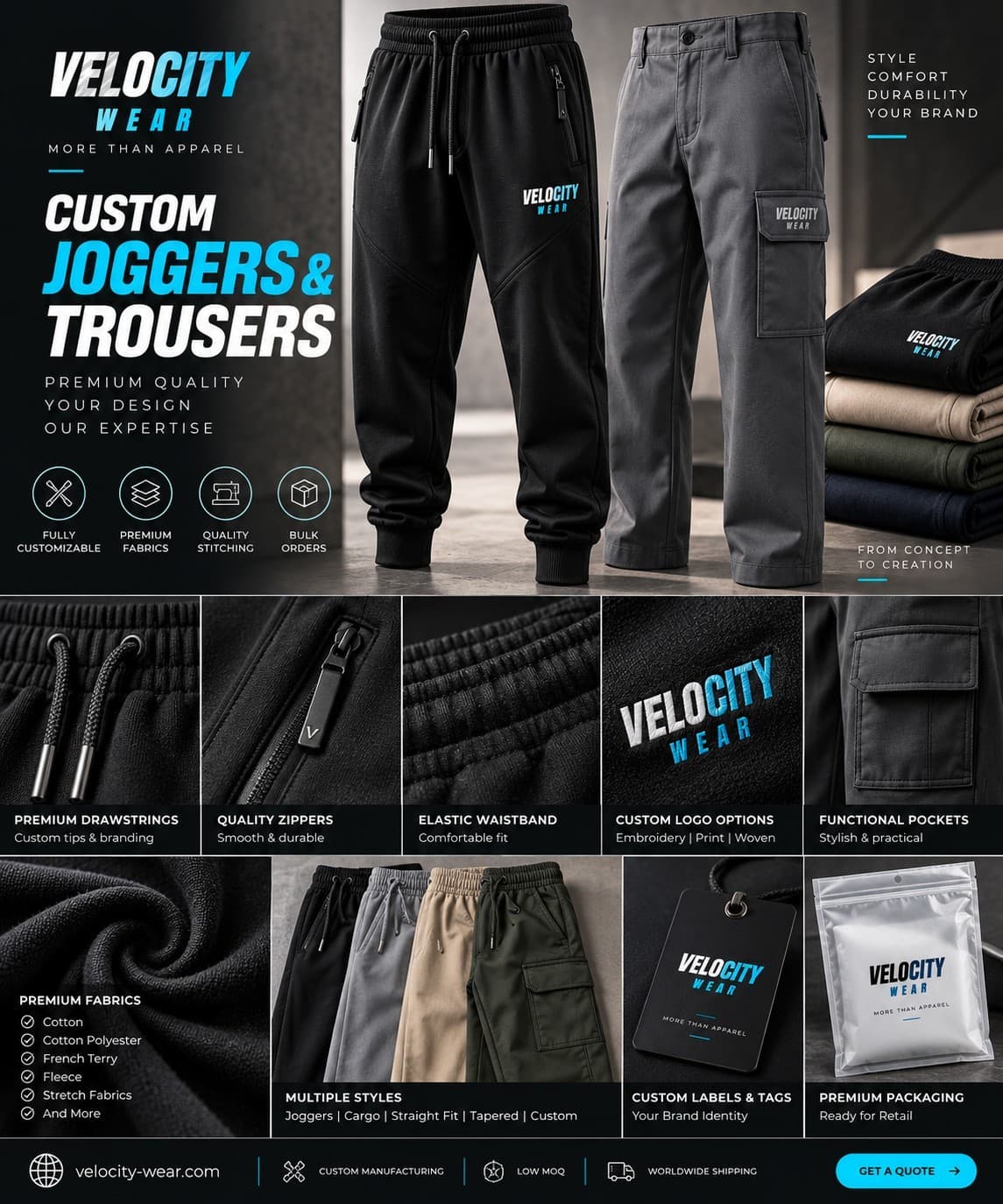
Joggers start at $22 a pair at the fifty-piece minimum, and for a charity that number has to justify itself twice: once as a cost and once as an alternative to spending the money directly on the cause. They usually do so as volunteer kit at repeat events, where the same garment is worn twenty times, rather than as one-off merchandise.
What does a pair cost against what it raises?
Split the question. Volunteer kit is an operating cost, judged on how recognisable your people are at an event and how many times the garment gets used. Merchandise is a trading activity, judged on margin and sell-through. Charities get into trouble when they buy the first and hope it behaves like the second. The wholesale joggers page has the specifications, and the charities and fundraising pages cover the wider kit list.
At $22 a pair falling through the tiers — up to 35% off the fifty-piece price at the top — a volunteer jogger worn across a season of events is a small per-use cost. The same pair sold once at a stall has to carry a retail margin to be worth the shelf space.
How do you size volunteers you have never met?
Order the curve, not the individuals. Volunteer rosters change between events, so a fixed allocation by name is wasted effort. Sizes mix freely inside the fifty, so build a spread weighted towards the middle and hold the extremes shallow. Issue and collect the kit rather than giving it away, and one run covers several years.
- Weight M and L heaviest, since they cover the largest share of any general volunteer group.
- Keep a handful of the smallest and largest sizes so nobody is turned away at a sign-in desk.
- Choose a cuffed hem, which fits a wider range of heights than an open hem does.
- Wash and reissue rather than re-ordering, which is where the real saving sits.
Should the order be kit or merchandise?
Kit, for most organisations. Merchandise ties up funds in stock, needs someone to sell it, and competes with a straightforward donation. Where merchandise does work is with a supporter base that already buys — a running club raising money, a cause with a strong visual identity, a cohort that wants the garment for its own sake.
If you do go to merchandise, keep the artwork undated so unsold stock sells at the next event rather than being written off. Custom apparel for charities and nonprofits goes through the fundraising side in more detail.
How should a charity time the order?
Production is 10 to 15 working days from artwork approval, with transit on top, and a sample at £150 credited against the bulk order if the design is new. A charity working to a fundraising season should have the artwork approved around six weeks before the first event, which usually means the decision is made a quarter ahead.
One design keeps it simple, because the fifty-piece minimum applies per design and a separate volunteer and supporter version doubles the spend. Where joggers sit alongside tees or hoodies, put them on one approval so the whole kit arrives together — custom printing for events and merch covers how those pieces are usually combined.