Wholesale Bottles: cost
By The Velocity Wear Team
Branded bottles are quoted per job rather than from a published unit price, because the bottle you choose changes the cost more than anything we do to it. What is consistent is the commercial frame around it: 50 pieces minimum per design, quantity tiers that run to 35% below the 50-piece price, a £150 sample credited against bulk, and a 10 to 15 working day build from artwork approval.
What sets the price of a branded bottle?
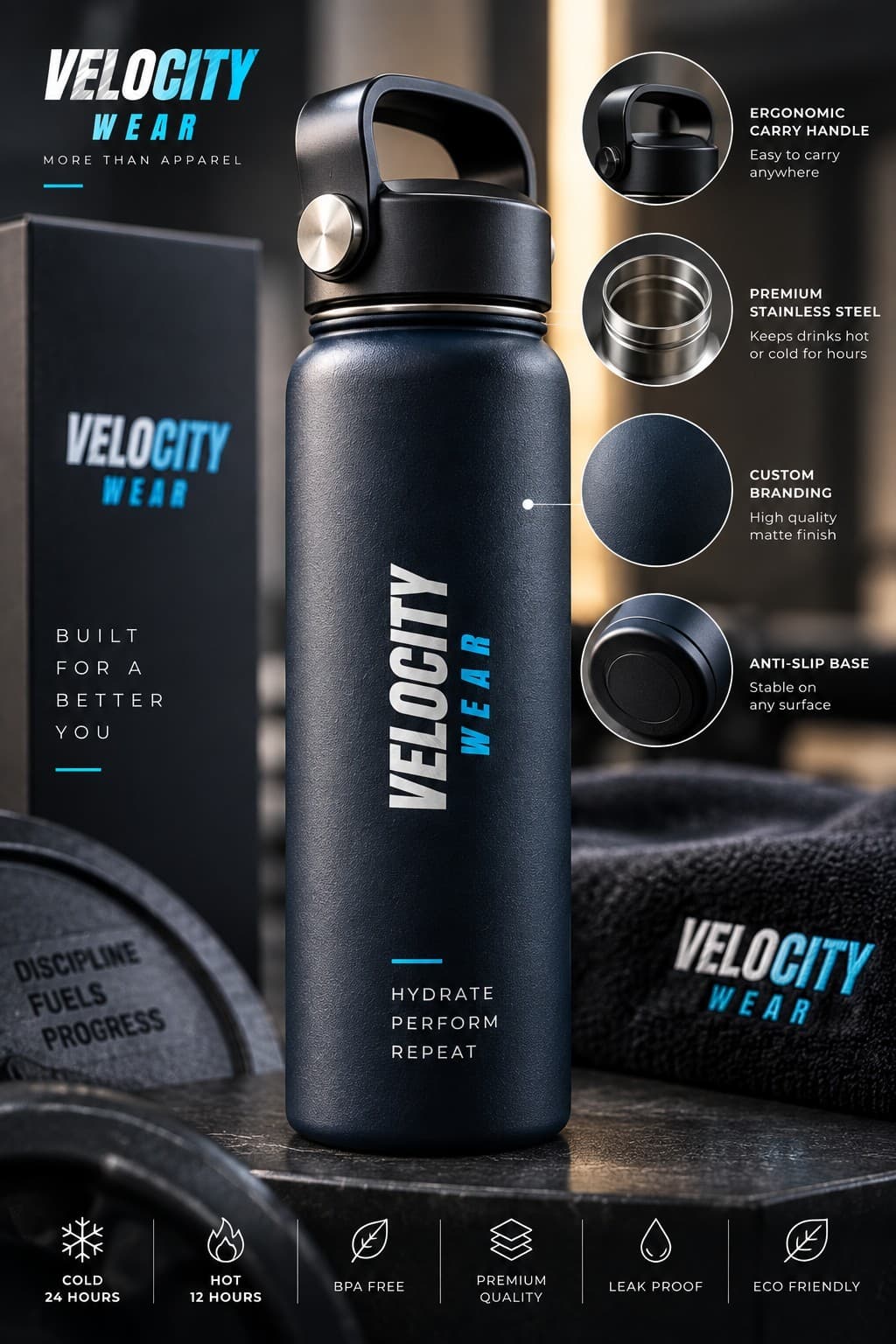
The base item dominates. Capacity, material and closure between them account for most of the difference between one quote and another, and they vary far more widely in drinkware than they do in a t-shirt. A bottle intended to live in a gym bag and one intended to sit on a conference table are different products with different costs, even with identical branding on the outside.
Branding is the second factor: how large the mark is, how many colours it carries, and whether it wraps. Quantity is the third and the one you control. Because those first two are entirely specification-led, no meaningful figure could be published on the bottles page without assuming a bottle you may not want. Tell us the capacity and the use case and the number comes back against that; the wholesale range shows how the same branding can carry across the rest of a kit.
How does the tier table work on drinkware?
Identically to everything else we make. The bands are 50–99, 100–249, 250–499, 500–999 and 1,000+, measured from the 50-piece price, with the deepest band reaching up to 35% below it. Bottles reward buying into the higher bands more than seasonal clothing does, because a branded bottle does not go out of fashion and does not need a size split.
The question worth asking before you commit to a deep tier is what the bottles are for. Staff kit is predictable and can be bought a year ahead. Event giveaways are less so, and a surplus of 400 bottles in a cupboard is worse value than a smaller run at a slightly higher unit price. Buy to a plan for distributing them, not to the discount.
Which extras move the quote?
Individual packing is the common one. Bottles bulk-packed for a warehouse and bottles individually boxed for a gift handout are different jobs, and it is worth deciding which you need before asking for a price. Colour matching is another: a stock colour is cheaper to work with than a specific brand shade, and the difference is not trivial at low volumes.
Delivery sits outside the unit price too, and matters more with drinkware than with clothing because bottles are bulky and heavy for their value. If you are shipping internationally, total the landed figure before comparing suppliers — the method is in landed cost: what a garment really costs.
Do bottles pay their way as merch?
They survive longer than most branded items, which is the whole argument for them. A printed bottle stays in a gym bag for a year; a flyer lasts to the end of the corridor. That longevity is why bottles work as the anchor item in a staff kit or a member welcome pack rather than as a throwaway giveaway, and the same reasoning behind low-cost add-ons is covered in tote bags and accessories that lift order value.
The trap is over-branding. A bottle covered in a strapline reads as an advert and gets left in the cupboard, while a bottle with a clean mark on it gets used in public. Restraint here is a commercial decision, not an aesthetic one.
Budget for distribution alongside the purchase. Bottles are heavy and awkward to post individually, so a plan that involves mailing them one at a time can cost more in postage across a year than the bottles themselves did. Handing them over in person, including them with a larger order, or sending them in batches to a site are all cheaper routes, and which one you pick decides whether individual packing is worth paying for at all.