DTF vs Screen Printing on Tracksuits
By The Velocity Wear Team
DTF wins on colour count and on short runs of mixed artwork. Screen printing wins on larger quantities of one simple graphic. A transfer costs the same whether the design carries two colours or twenty, while a press needs a screen for every colour and then recovers that outlay across the run, which only works if the run is big enough.
How many colours before screens stop making sense?
Roughly three. Up to three colours a screen print is straightforward and the setup is small enough to disappear at fifty sets. At five or six colours you are paying for five or six screens, registration gets fussier, and a DTF transfer becomes the sensible route because extra colours are free.
Photographic artwork settles the argument entirely. Screens reproduce a photograph through halftones, which on brushed fleece is a fight nobody needs. A transfer prints the image and lays it down in a single pass.
Where the colours sit matters as much as how many there are. A screen print with three colours touching each other needs tight registration on a stretchy fleece, and every registration point is somewhere a misprint can begin. A transfer carries all of its colours in one film, so nothing can shift out of line. On artwork with interlocking shapes or fine outlines that is often the deciding factor rather than any cost comparison.
What about a small run with variations inside it?
This is where transfers earn their place. Fifty sets is the minimum per design, so five designs is five orders. Inside a single design, though, variations such as squad numbers, player names or year groups are far cheaper by transfer than by screen, because nobody wants to burn a screen for one numeral.
If the order is fifty sets of one graphic and nothing else, the maths swings back the other way. That is the classic screen printing job, and the quantity bands then do the rest of the work as the order grows.
How does each one feel on fleece?
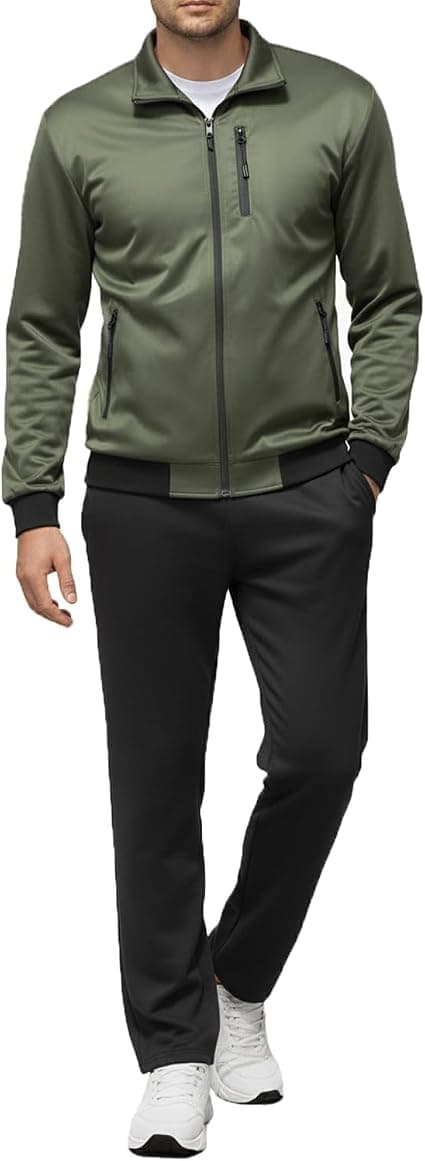
A screen print sits in the fabric. Laid with a soft hand it is barely detectable after a wash or two. A transfer sits on the fabric as a thin film, so a large solid area has a slight plastic feel and a defined edge you can trace with a fingertip.
That matters more on a tracksuit than on a tee, because brushed fleece has loft and a hard film across a whole chest panel reads as stuck on. Keep transfers to shapes with open space inside them rather than one solid block and the difference stops being noticeable.
Placement feeds into it as well. A transfer on a jogger thigh flexes every time the leg moves, so keep it modest in size and clear of the seams. The same artwork sits perfectly happily across a back panel, where the fabric barely moves at all.
Which one should you put on the order?
Choose DTF when the artwork is full colour or photographic, when names and numbers vary inside one design, or when the graphic is small and finely detailed. Choose screen printing when the design is one to three flat colours, the area is large, and the quantity sits high enough for the setup to disappear.
Durability is close enough that it should not decide it. Both hold up on fleece when applied properly. If stitching is also in the running, screen printing against embroidery handles that pair, and the broader decision guide covers the rest. Sets start at $53 at the fifty-set minimum on our bulk tracksuits page.