Care and Washing for Tracksuits
By The Velocity Wear Team
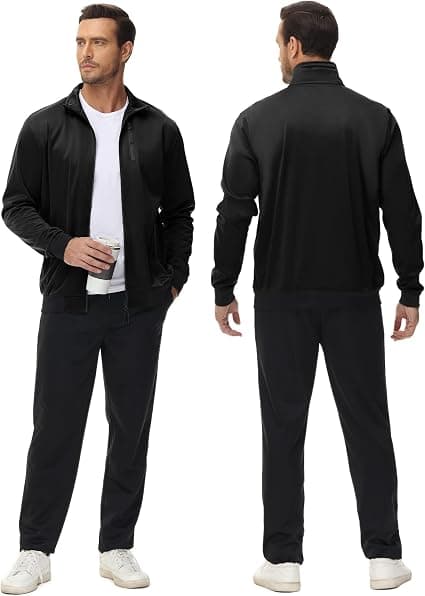
Wash a custom tracksuit at 30°C, inside out, and keep it out of the tumble dryer. That single routine protects a screen print, a DTF transfer and an embroidered crest at the same time. On a co-ord set the real risk is colour drift: if the hooded top and the matching jogger are washed differently from the first week, they stop reading as a pair long before either garment wears out.
What temperature should a printed tracksuit be washed at?
Thirty degrees, normal cycle, garment turned inside out. Loopback and brushed fleece are cotton-rich, and cotton moves when it gets hot — a 60°C wash is what quietly turns a size L top into something closer to an M across the chest. Ink is the second reason. Plastisol screen print and DTF film both sit on the surface of the cloth, and repeated hot cycles soften the bond at the edge of the print until it cracks along fold lines. Sets ordered through our wholesale tracksuits page carry that advice on the label, though a label only helps if somebody reads it before the first load.
Detergent matters more than most buyers expect. Powder with optical brighteners is harsh on saturated colours, and a royal blue or a deep burgundy will go chalky within a few months of it. Liquid detergent, and no fabric conditioner. Conditioner coats the fibre, and over a brushed fleece it flattens the pile so the fabric looks dull and feels slick where it used to feel soft.
Why does the jogger fade faster than the top?
Because it works harder. A jogger is sat on, knelt in, dragged across a car seat and worn on days the top stays at home. It goes through the machine roughly twice as often, and abrasion on the seat and knees lifts surface fibres so the dye reads lighter even before any real colour has gone. The top spends much of its life layered over something else, protected from the same friction.
The fix is dull and it works: wash both halves together, or at minimum on the same programme and at the same frequency. If someone wants a spare jogger because their half gets more wear, add it to the original run rather than ordering it three months later. Matching a dye lot after the fact is the hardest thing to ask of any factory, and we set out why in can I reorder the same design later.
What has to appear on the care label?
Fibre composition as a percentage, the size, the wash symbols and the country of manufacture. That is the working minimum for selling apparel across the UK, the USA and Europe, and the content is the same whether it is woven into the neck, heat-applied as a tagless transfer, or sewn into the side seam as a tear-out. Care labels and clothing compliance goes through the requirements in detail, and the shorthand used on quotes is defined in the glossary.
On a tracksuit the tear-out tends to win. A hooded top is worn against the neck, and a stiff woven label there is the first thing somebody cuts out with scissors — taking a chunk of the neck tape with it. A tear-out in the side seam holds the legal information, survives washing, and comes out cleanly if the wearer wants it gone. The jogger gets its own, because it is a garment in its own right even though it is sold as half a set.
Does embroidery survive a tumble dryer?
It survives better than print does, which is one reason club crests are usually stitched rather than printed. Thread does not crack. What heat does instead is shrink the fabric underneath the stitching, and because the stitched area cannot shrink with it, the crest starts to pucker and sit proud of the surface. Once that happens it does not flatten out again.
Air drying is the answer, ideally flat rather than hung by the shoulders — a wet hooded top is heavy enough to stretch its own shoulder line on a hanger. If a dryer is unavoidable, use the coolest setting and pull the set out slightly damp. The last ten minutes of a dry cycle is when most of the shrinkage happens.