Selling Your Clothing Brand to Retailers: A Wholesale Primer
By The Velocity Wear Team
Need this made?Get pricing for this product— free, no obligation, 50 pieces minimum.
Wholesale requires your unit cost to support two margins — the retailer's and yours — from the same retail price. That usually means ordering at quantities where bulk discounts of up to around 35% apply, because a cost base built for direct selling rarely survives the addition of a stockist.
The Maths Changes Completely
Selling direct, the gap between your cost and your retail price is entirely yours. In wholesale, a retailer buys from you at a trade price and sells at retail, taking a margin that reflects their costs — premises, staff, the risk of holding your stock. Your margin now has to fit into what remains. Brands that have priced comfortably for direct sales frequently discover there is simply no room for a second margin, which is a cost problem rather than a pricing one.
Fixing the Cost Base First
The lever is quantity. Bulk discounts reach up to around 35% as volumes rise, so the same garment produced at wholesale-appropriate quantities has a materially different unit cost from one produced in small direct-to-consumer runs. Before approaching retailers, model realistic wholesale volumes in the free instant price calculator and check whether the resulting cost supports the structure. If it does not, the answer is usually volume rather than a higher retail price.
What Stockists Actually Want
Beyond margin, retailers are assessing risk.
- Consistency. They need the third order to match the first, which means your specification must be documented and reproducible.
- Reliable supply. A stockist that sells out and waits six weeks for a reorder will not repeat the order.
- A full size range. Retailers cannot sell to customers whose size you do not produce.
- Presentation — labelling, care information and packaging that looks like a product rather than a printed blank.
- Something that sells. Evidence from your own direct sales is genuinely persuasive here.
Consistency Is the Real Test
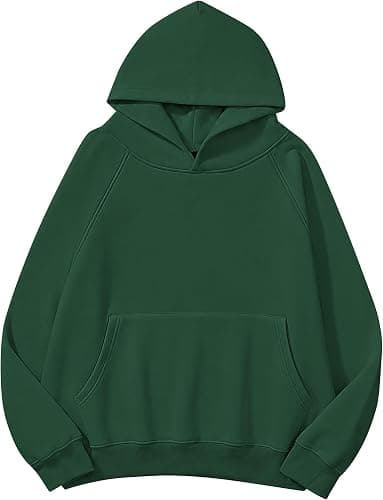
This is where small brands most often fail at wholesale. A retailer who received a hoodie in one shade and receives a subtly different one on reorder has a problem you have created for them, sitting on a rail next to the original. Record garment codes, colour references, logo dimensions, placement and thread numbers, and reorder from that written specification every time. Reproducibility is not a detail in wholesale; it is the product.
“"A retailer is not buying your hoodie. They are buying the promise that the next fifty are identical to it."”
Supply and Lead Times
Stockists reorder on their own timetable, not yours, so you need either stock in hand or a clear reorder cycle. Production runs around 10–15 working days from artwork approval for screen printing and embroidery, or nearer 15–20 for sublimation and complex jobs, plus 2–5 working days tracked UK delivery. Build that into what you promise, and hold buffer stock of anything a stockist carries.
Labelling and Presentation
Products sold through retail need to look finished. That generally means your own neck branding rather than a blank manufacturer's label, a care and composition label carrying the required information, and packaging suited to a shop environment. Fibre composition information is required on textile products sold to consumers in the UK, so check current GOV.UK guidance to confirm what your labelling must carry.
Starting Small
One or two stockists is a sensible beginning. It tests whether your cost base, consistency and supply actually work in a wholesale structure before you commit to more. Orders start at 50 pieces with mixed sizes allowed, so trialling the arrangement does not require a large speculative order — and preview any labelling or branding changes in the free Design Studio before committing.