Ordering Polo Shirts for Tour Season
By The Velocity Wear Team
Tour polos need to be counted and boxed before load-in, which is usually a week before the first date rather than the day of it. Count backwards from that packing day: transit, then 10 to 15 working days of production from artwork approval, then the artwork window. A spring tour is a January order, and a summer run is booked before Easter.
Why is the packing date the real deadline?
Because merch that arrives after the van has gone is merch you sell on the last three dates instead of all of them. Whoever runs the merch table needs the stock in one place long enough to count it, split it into size runs and decide what travels. If the delivery lands the morning of the first show, none of that happens and the first night is sold out of the wrong sizes.
Build the count from that packing day. It is typically five to seven days before the opening date. Then transit, which is longer if the kit ships to a different country from the one the tour starts in, then the fifteen working days of production. Anybody touring the USA or Europe from a UK base should treat the transit leg as the part most likely to move.
How should tour stock be split across sizes?
Weight the curve into the middle and be honest about the tail. Merch tables sell out of medium and large first and finish the run holding small and 2XL, which is fine as long as you planned for it rather than paid for it. Sizes mix freely inside the fifty-piece minimum, so you can set that curve exactly rather than taking a standard pack.
Splitting stock by date is the other half of the problem. Do not send the whole run out on night one. Hold back a proportion so the later dates still have a full size range, and keep a small reserve entirely off the table for replacements and the people who need looking after. How the cartons arrive makes this much easier or much harder, which how bulk polo shirts are packed goes into.
What makes a polo work as tour merch rather than staff kit?
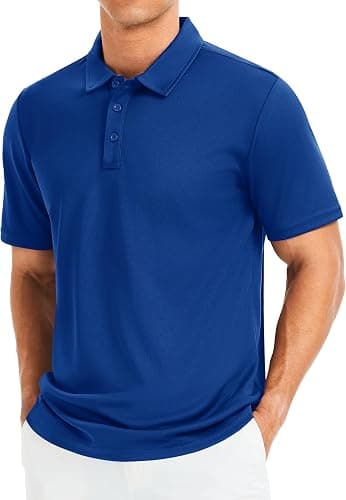
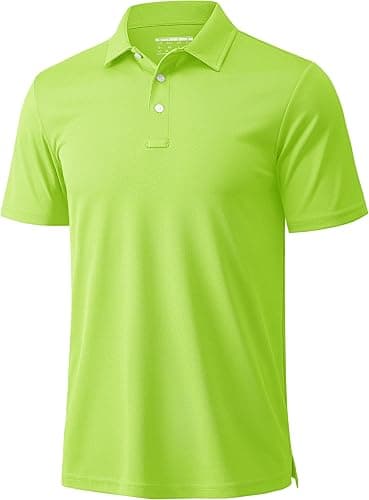
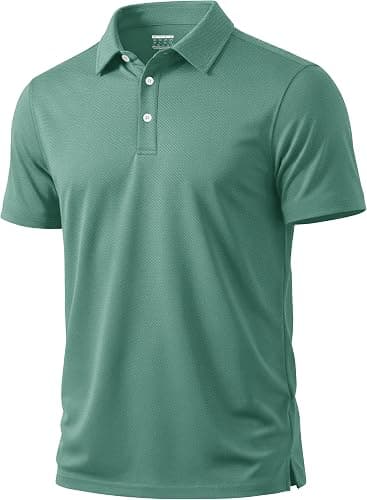
A polo sells on tour for the reason a t-shirt does not: it is the thing somebody wears to work afterwards. That argues for a design that reads as a garment rather than a poster. A small embroidered chest mark with a printed back graphic carries more weight than a large front print, and it survives being worn outside the context of the tour.
Leave the dates off unless you are deliberately making a collectible, because a dated polo has no second life and cannot be carried to the next run. Branding the inside of the collar does more for the garment than any extra front print, and the options are set out in neck labels on wholesale polo shirts. Fabric and collar choices are listed on the wholesale polo shirts page.
Should you order a sample before a tour run?
If the polo is going on a table next to a price that is higher than a t-shirt, yes. A sample is £150 and is credited against the bulk order, and it gives you a real garment to photograph for the pre-order page weeks before the run exists. The samples page covers the build time, which needs to sit in front of the production window rather than overlap it.
For a repeat of a garment that already sold well, put the money into stock instead. The volume tiers run from 50–99 up to 1,000-plus with up to 35% off the fifty-piece price, so a tour with enough dates to justify a bigger run gets a materially better margin per piece.