How Do I Work Out How Many Sizes to Order?
By The Velocity Wear Team
Need this made?Get pricing for this product— free, no obligation, 50 pieces minimum.
Start from who is actually wearing the garments rather than from a formula. If you know the wearers, collect their sizes and order to that list with a small spare allowance in the middle sizes; if you do not know them, weight the order heavily towards M, L and XL and treat S and 2XL as thin tails. Our minimum is 50 pieces per order and you can mix sizes freely inside that run, so the real question is not whether you are allowed a split, it is where you put the units you are not certain about.
Known Wearers Versus Unknown Wearers
These are two completely different problems and people muddle them constantly. A staff uniform order for 34 named people is an administrative task: ask everyone, chase the four who never reply, order what the list says. An order of 100 tees for a festival stall, a freshers' fair or a giveaway is a forecasting task, and forecasting is where the guesswork lives.
If you are somewhere in between, split the order mentally. Order for the known people exactly, then treat the remainder as unknown stock and apply a general curve to that portion only. Mixing the two into one spreadsheet is how you end up with nine 3XLs nobody asked for.
The Shape of a General Adult Curve
For a mixed adult UK group with no other information, the distribution is middle-heavy and skews slightly upward. Medium and large carry the bulk, XL is close behind, small is a modest slice, and 2XL upwards is real but small. That is the shape, not a set of numbers to copy, because the moment you know anything about the group the shape moves.
A construction crew skews larger. A student society skews smaller. A running club skews smaller still and tighter in fit. A hospitality team with a wide age range spreads out. Any one of those pieces of context beats a generic curve, so use the curve only when you genuinely have nothing better.
The Garment Itself Moves the Curve
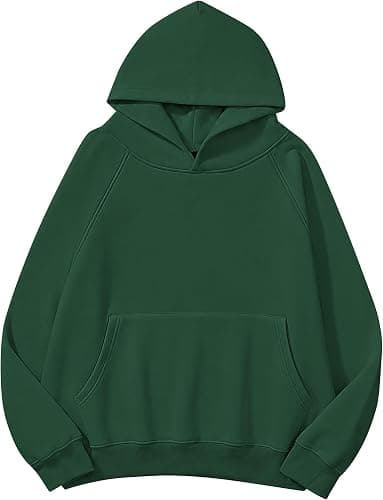
People do not buy the same size across every garment, and this catches out first-time buyers. Hoodies get ordered up: plenty of people who wear a medium tee want a large hoodie because they want room and a longer body. Polos run the opposite way, particularly fitted or slim-cut styles, and a polo that fits well often needs a size up from what someone assumes.
Ladies-fit garments are not simply smaller unisex ones. The armhole, shoulder and body shaping are different, so a size 12 in a ladies fit is not the equivalent of a small unisex. If you are offering both, ask people to pick a fit first and a size second, and give them the flat measurements for each.
Ask for Measurements, Not Sizes
Here is the non-obvious bit. When you ask a group what size they are, half of them tell you what they wore in 2016 and a quarter tell you the size of a completely different brand. Sizing is not standardised across manufacturers, and a large from one blank supplier can be a full inch different across the chest from another.
The fix is to give people a chest measurement in inches or centimetres for each size in the specific garment you are buying, taken flat across the chest an inch below the armhole. Ask them to measure a garment they already own and like, then pick the closest match. It takes people two minutes and it removes most of the guesswork.
Running the Size Collection Without Chasing People for a Fortnight
- Give one deadline and say plainly what happens to anyone who misses it: they get the default size, and that is the end of it.
- Publish the flat chest measurements for the exact garment, plus the body length, so people are choosing against real numbers.
- Offer a short, closed list of options. An open text box produces answers like 'medium-ish' and 'whatever Dave has'.
- Ask for fit preference separately: unisex or ladies fit, relaxed or close-fitting. Two clicks, far fewer complaints.
- Record the final list somewhere you can find it in eight months, because your reorder will be far easier if you do.
Where to Put the Spare Units
Almost every order ends up with a few units of slack, either because you rounded up to hit a better price break or because you want a couple in reserve for new starters and lost garments. Put that slack in large and XL. Those are the sizes that get requested later, the sizes a broad range of people can wear at a push, and the sizes that actually clear if you sell the remainder.
“"Every leftover box I have ever seen is full of smalls and 3XLs. Nobody over-orders mediums by accident."”
Sample First If the Order Is Big or the Fit Matters
If you are committing to a large run, or the garment is going to be worn every day, get one in your hands before you fix the size split. Feel the weight, check the body length against a real person, see whether the sleeve sits where you expect. Fifteen minutes with a physical garment tells you more about your size curve than an afternoon of spreadsheets.
Use the instant price calculator to see how quantity moves the unit cost while you are deciding, and lay the design out in the Design Studio so you can see how the print scales on a small versus a 2XL. A chest print that looks balanced on a large can look undersized on a 2XL, and that is a decision worth making before the order goes in, not after.