Branding Options for Hotels
By The Velocity Wear Team
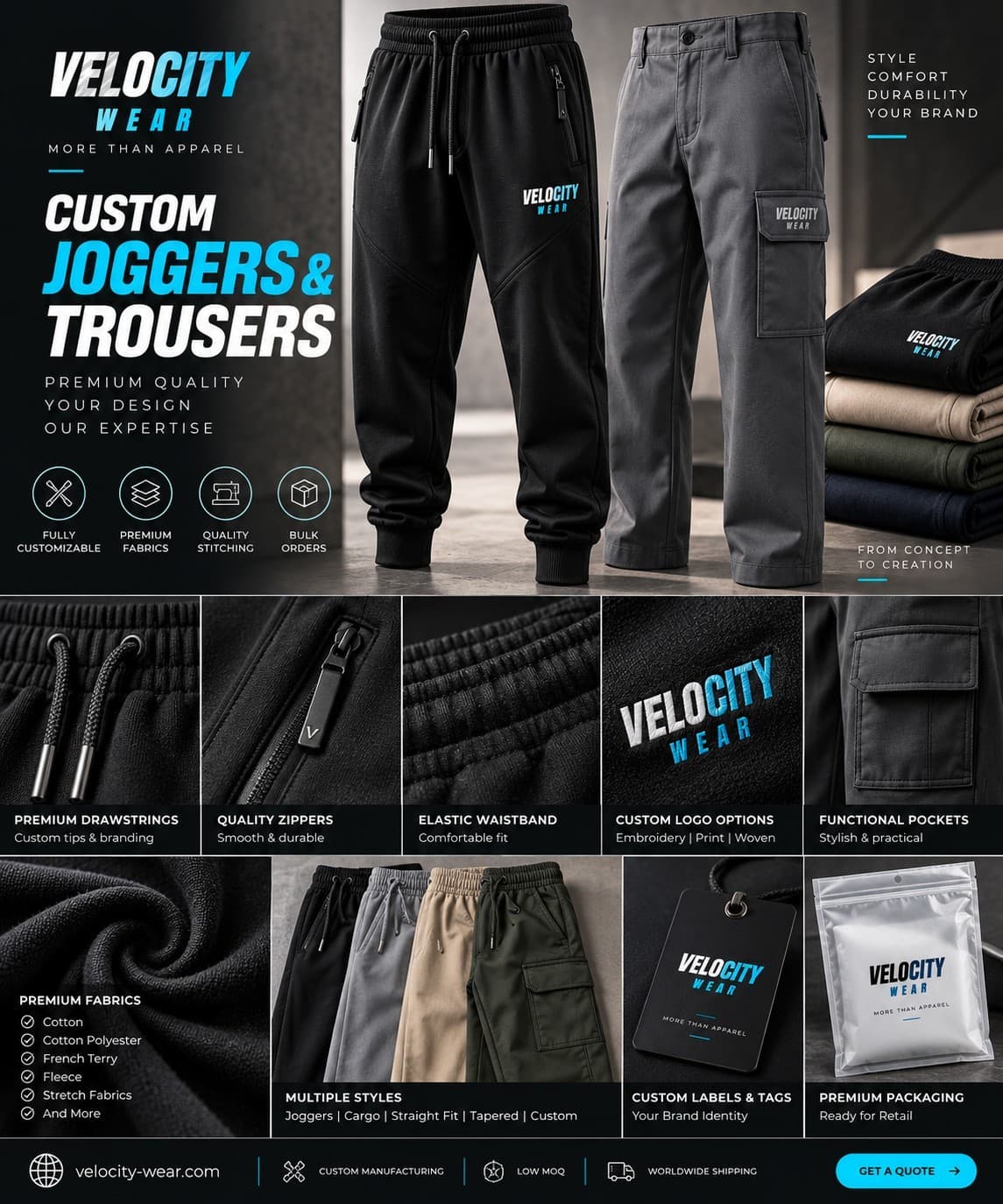
Hotel kit can carry a custom woven neck label, a tear-out label, a swing tag and its own packaging. Woven labels suit guest-facing roles because the finish reads as deliberate, tear-out labels suit anything worn against the skin, and swing tags mostly earn their place on retail pieces rather than staff garments. All of it is specified on the same order as the garment.
Which label type suits a guest-facing garment?
A woven neck label is the default for reception, concierge and restaurant staff. It sits flat, it survives the laundry better than a print, and it removes the manufacturer branding that otherwise sits inside the collar of every piece in the building. For spa and treatment roles, where the garment is worn against the skin for long stretches, a tear-out label gives the wearer the option to remove it without leaving a cut edge. Both are part of the private-label options listed across the wholesale range.
How should pieces arrive at a property?
Ask for the packing format before the order ships, because it decides how much work lands on your housekeeping office. Individually bagged and size-labelled means a new starter can be handed a sealed piece. Bulk packed by size means someone has to sort 50 garments on a corridor floor. For multi-site groups, pieces can be split and labelled by property so each box goes straight out rather than being redistributed. Towels and spa linen are quoted per job and packed to the spec agreed in that quotation, which you can raise on the towel and linen pages.
Do swing tags make sense on staff kit?
Rarely, and that is worth saying plainly. A swing tag is a retail device: it carries a price, a story or a care instruction to a customer standing in a shop. Staff kit goes from a box to a cupboard to a body, and the tag ends up in a bin. Where tags do pay off in hospitality is on anything you sell or gift: a robe in a spa retail cabinet, a tee sold at the bar, a piece given to a long-stay guest. Our wider guide to labels, tags and packaging covers where each format actually lands.
What artwork do we need to supply for labels?
A vector file of the mark, the exact wording you want on the label including any care text, and a decision on size and placement. Woven labels hold less detail than a print, so a crest with fine linework usually needs a simplified version for the collar even when the chest logo stays as drawn. That simplification is a design decision worth making once and storing, because it will be reused on every reorder. The trade-offs between woven, printed and stitched branding are set out in our piece on woven labels and branding details.
One sequencing note: label artwork has to be approved alongside the garment artwork, because the 10 to 15 working day production window starts from that approval. A label signed off a week late moves the whole delivery a week, no matter how ready the printing is.
Groups running more than one brand under a single operator should settle early whether the neck label carries the operator name or the property name. The operator name lets one run cover several sites and reach a better tier. The property name reads better to a guest who only knows the building they are standing in. There is no universally right answer, but changing your mind after the first run means new label artwork and a fresh approval, and approval is what starts the 10 to 15 working day production window. Decide it before the first order rather than during the second.
Keep a written label specification beside the artwork: label type, dimensions, wording, position and fixing method. It runs to four lines, and it is the first thing a new purchasing manager will look for. Without it the second run becomes a reconstruction rather than a repeat, and the collar is exactly where that difference shows.