Sizing a Clothing Order for Gyms
By The Velocity Wear Team
Sizes can be mixed freely inside a fifty-piece run at no extra cost, so the size curve is a planning decision rather than a pricing one. For a gym the curve should follow your actual membership rather than a generic retail spread, and it should differ between staff kit, which you can measure precisely, and member merch, which you have to estimate.
What size curve fits a gym membership?
Weight it towards the middle and lean slightly larger than a generic clothing spread. Gym merch is worn loose more often than fitted, and members who are unsure between two sizes almost always take the larger one. A curve that puts most of its depth into medium and large, with meaningful numbers at extra large, tends to clear better than one that spreads evenly across the whole range.
The extremes need care rather than avoidance. Ordering nothing in double extra large means turning away members who want to buy, which is a worse outcome than a few unsold pieces. Ordering a deep run of extra small on a hoodie, though, is usually money sitting still. Two or three at each end is a reasonable hedge on a fifty-piece run.
Should staff and member sizing be split differently?
Completely differently, because you have different information. For staff you can ask everyone their size and order exactly that, plus a small margin for turnover and for the piece that gets ruined in its first month. There is no reason to guess on a run you can count. Most clubs add around ten per cent on top of the headcount for that margin.
Member merch is the opposite: you are forecasting demand from people who have not yet decided to buy. That argues for a broader curve, a bias to the middle, and a willingness to be wrong in a cheap garment rather than an expensive one. Get the curve wrong on a $13 t-shirt and you have a minor problem; get it wrong on a $53 tracksuit and it is a real one. The gyms and fitness page covers the kit split, and the wholesale range lists what each product opens at.
How do you avoid a box of unsold extremes?
Four habits, none of them complicated.
- 1Record what sells, size by size, from the first order onwards. Two runs of data beats any general rule.
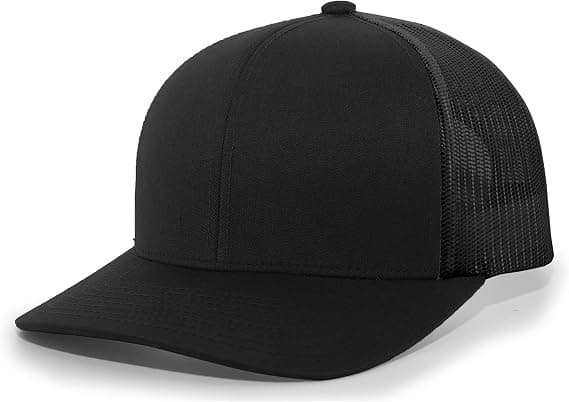
- 2Use one-size items such as caps to soak up part of the budget without any size risk at all.
- 3Presell the expensive garments where you can, so the curve follows real names rather than estimates.
- 4Keep the same fit and grading across reorders, so last year's data still means something this year.
That last point matters more than it sounds. If the fit changes between runs, a member who takes a large in one batch may need an extra large in the next, and your historical data stops predicting anything. How grading works across a range is covered in how garment sizing is graded.
Does the garment change the curve?
It does. Hoodies and outerwear are bought loose, so the curve shifts up a size relative to t-shirts. Polos worn as staff uniform are usually bought closer to true size, because they are worn tucked or fitted. Joggers introduce leg length as a second variable that a t-shirt simply does not have. Applying one curve across a whole range is the most common sizing mistake we see.
Returns and exchanges are the cost of getting this wrong, and they land on you rather than on the manufacturer once the stock is in the building. There is a fuller treatment in apparel sizing and fit.