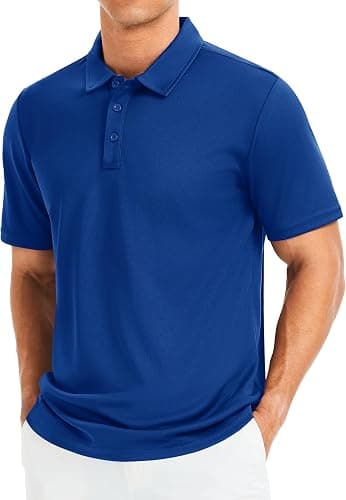
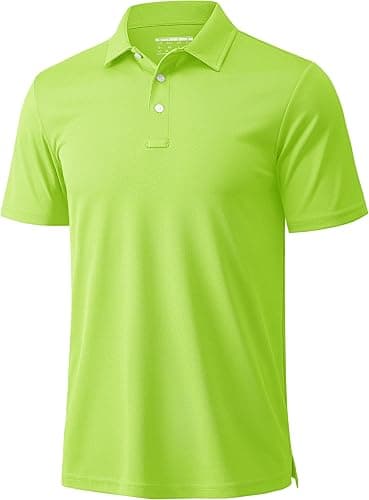
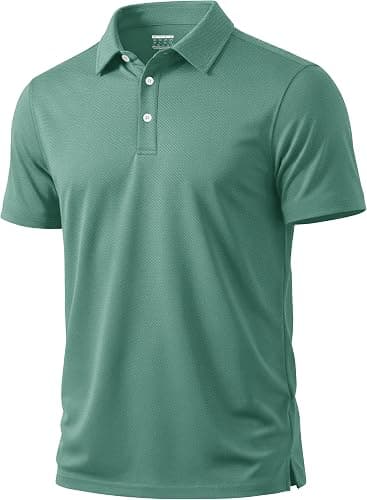
Custom Apparel for Golf Clubs
By The Velocity Wear Team
Need this made?Get pricing for this product— free, no obligation, 50 pieces minimum.
A golf club is buying apparel for two different purposes at once. Staff kit is a cost you control, and proshop stock is inventory you have to sell. They deserve different decisions on colour, depth and design, and the most common mistake is treating them as one order with one set of assumptions.
Two Buyers, Two Sets of Economics
Staff kit can be dictated. You choose the colour, you choose the sizes, and the only real requirement is that it looks consistent and lasts a season. Proshop stock cannot be dictated at all, because a member has to want it enough to pay for it while standing next to shelves of major brand clothing. Confuse the two and you end up with a rail of club colour polos in a shade nobody would choose to wear off the course.
For the shop, that means being ruthless about what actually sells: navy, white, mid grey and one seasonal colour, with the crest doing the identity work. Club colours belong on the crest and the trim, not necessarily on the body of every garment.
Depth Beats Range in a Proshop
Small shops consistently make the same error. They order eight designs and two of each, the rail looks full, and within a fortnight every remaining garment is in a size that does not fit the people still browsing. Fewer designs ordered deeper across a full size curve sells far more, holds less capital, and looks better after the first month.
Golf memberships also skew towards larger and longer fits more than general retail does, so an even spread across sizes will leave you short in the middle and upper range while small sits unsold. Order to your actual membership rather than to a standard curve.
Crests Almost Always Need Redrawing
Golf club crests are heraldic, detailed and full of small text: a founding date, a motto, sometimes a scroll and a Latin phrase. At chest size in embroidery, thin lines merge and small lettering becomes an unreadable smudge. This is not a failure of the embroiderer, it is a limit of stitching thread into cloth at that scale.
The fix is to have the crest simplified specifically for stitch: fewer internal details, thicker strokes, small text either enlarged or removed, and a minimum stitchable size established. Do it once, keep the file, and use it on everything. A crest redrawn properly looks designed. One forced through unaltered looks broken, and members notice.
Keeping Staff Visually Distinct From Members
If the proshop sells the same polo the staff wear, visitors will approach members with questions and members will be mildly irritated by it. Give staff either a dedicated colour that is not on sale, a different collar or trim treatment, or a clear name and role badge. Greenkeeping is a separate matter again and should be in genuine workwear with high visibility where the course requires it.
- Reserve one colourway exclusively for staff and never stock it in the shop.
- Order proshop stock in fewer designs with a full size curve rather than many designs shallow.
- Establish a stitch ready version of the crest once and reuse the file everywhere.
- Keep greenkeeping in proper workwear rather than in retail polos.
- Plan captain's year, society day and visitor gift items as separate small runs, since sizes mix freely within an order.
Performance Fabric and What It Means for Decoration
Modern golf polos are largely polyester, which changes your decoration options. Embroidery works well and is the traditional choice for a crest. Sublimation goes into the fibre with no surface layer at all and is excellent for all over patterns and panel designs, but it only works on polyester and only on light bases, so it will not put a crest on a navy shirt. DTF handles detail on polyester without per colour setup and suits shorter runs. DTG is cotton only, so it is out for most performance fabrics.
One practical warning about embroidery on lightweight performance knit: a dense crest on a thin stretchy fabric can pucker if it is not backed properly. Ask for a sample on the actual garment rather than approving from a mockup.
Society Days, Captains and Small Runs
Society days, captain's charity events and visiting party gifts all involve small quantities on a fixed date. Minimum order is fifty pieces per order with sizes mixed freely, which suits these runs well. Build the timeline backwards from the event and remember production starts at artwork approval, with embroidery typically around ten to fifteen working days from that point and UK delivery usually two to five working days after dispatch.
“"A crest drawn for a blazer badge will not survive being shrunk onto a chest. Redraw it once, properly, and stop arguing with the needle."”