Driving Range and Sports Venue Polos: Kit for Three Jobs
By The Velocity Wear Team
Need this made?Get pricing for this product— free, no obligation, 50 pieces minimum.
A driving range or multi-sport venue runs three businesses in one building: retail, hospitality and an outdoor operation. The polo is usually the only garment that spans all three, so it needs a performance fabric that still takes clean embroidery, a collar that survives repeat washing, and a layering system for the staff who are actually out in the weather. Velocity Wear supplies branded venue kit online from a 50-piece minimum per order, with sizes mixed freely.
Why the Polo Is the Right Default Here
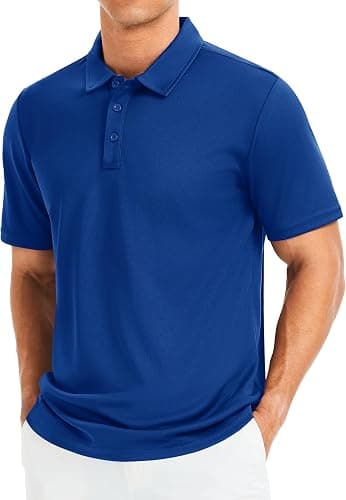
Golf and racquet venues carry a dress code culture, whether it is written down or not. Staff kit sets the tone for what members and visitors think is expected of them. A collar reads as a member of staff rather than a customer, and it does that without a lanyard. It is also the one garment that works behind a till, at a bar and out on a range floor without looking wrong in any of the three.
Performance Fabric and Embroidery Do Not Always Get On
This is the point most venues learn the expensive way. A fine, lightweight moisture-wicking knit is lovely to wear and difficult to embroider well: the stitching pulls the knit and the logo puckers, or the fabric shows through around dense stitch areas. A competent embroiderer solves it with the right backing and a design adjusted for the fabric, but the design has to be simplified first. Thin outlines, drop shadows and text set very small do not survive being stitched into a stretchy polyester.
If your brand mark is genuinely detailed, DTF is the honest alternative. It puts full colour and fine detail onto polyester with no per-colour setup, and a gradient costs nothing extra. It sits on the surface rather than in the cloth, so it reads as a print, but on a technical polo that is not out of place.
Collars Are Where Venue Polos Die
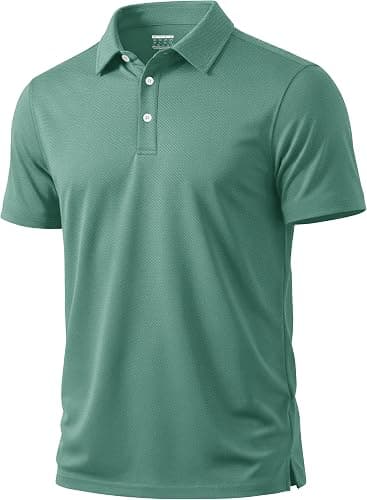
Fabric fades slowly and evenly, and nobody minds much. Collars collapse, and everybody sees it at once. A soft unstructured collar on a lightweight polo will be curling within a season of two washes a week, and no amount of good branding rescues a shirt that looks slept in. Look for a ribbed or self-fabric collar with some body to it, and judge what the garment does after a hot wash rather than what it looks like new. Buying one grade up here saves more money than any other single decision in a venue order.
- Retail and reception: a heavier piqué polo, embroidered, in the venue's core colour.
- Bar and food service: the same polo in a darker shade, because spills are the whole job.
- Range floor and outdoor staff: a moisture-wicking polo plus a windproof softshell for ball collection and winter evenings.
- Coaching staff: a distinct colour so members can spot a professional across a floodlit range without asking.
- Caps: worth doing at an outdoor venue, and one of the few places embroidery gets looked at all day.
Colour Is a Wayfinding Tool, Not a Style Choice
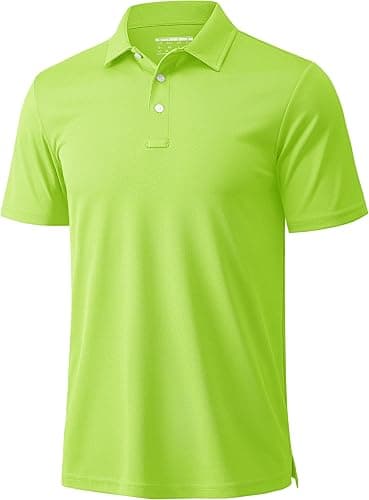
On a busy floodlit range at seven on a January evening, a customer wants to find a member of staff quickly. They will not read logos at that distance. They will look for a colour. Pick one saturated colour for floor staff and hold it consistently, and use a second colour for coaches if you want customers to tell the two apart. Whatever you do, avoid dressing staff in the palette your customers turn up in, which at a golf venue is usually white, navy and grey.
“"A collapsed collar ages a polo faster than a season of sunlight, and there is no logo good enough to save one."”
The Outdoor Half Needs a Layering Plan
Ball collection, mat changes, bay cleaning and outfield work happen in weather a polo alone cannot cover. A branded softshell or fleece over the same polo keeps the look consistent while making the job survivable. Two practical notes. Decorate the mid-layer rather than the waterproof shell wherever you can, because stitching through a waterproof puts needle holes in the thing keeping water out, and manufacturers differ on whether they allow it. And make sure the outer layer carries branding of its own, because for four months of the year it is the only garment anyone sees.
Ordering Across a Mixed and Seasonal Team
Venue teams skew towards a wide age range and a wide size range, with seasonal staff arriving for summer and for the run-up to Christmas. Order to a size spread rather than to a staff list, and keep spares in the store cupboard. The 50-piece minimum is per order with sizes mixed freely, so a small range can cover reception, bar and floor staff in one run rather than three, and bulk discounts reach up to around 35% as the quantity climbs.
Time it around your season, not your budget cycle. Production starts at artwork approval rather than order placement, and as guidance embroidery and screen printing take around 10 to 15 working days from approval, with UK tracked delivery usually adding 2 to 5 working days. If you want new kit on the floor for the spring, approve artwork in winter. The free Design Studio lets you preview placement on the actual garment, and the instant price calculator shows what happens to the cost per piece as you add quantity.