Clothing Brands: Trade Show Season Order Deadlines
By The Velocity Wear Team
Have trade show kit in hand a week before the stand goes up, which means ordering six to eight weeks before the show opens. Production takes 10-15 working days from artwork approval, transit follows, and a spare week at the end is what lets you fix a wrong size or a missing box rather than discovering it in a hall.
How early does trade show kit need ordering?
Six weeks is the floor, eight is comfortable, and the difference is the sample. Approving artwork six weeks out puts the build inside three calendar weeks, leaves a week or more for transit and still holds a week of margin. Start at four weeks and the schedule only works if nothing at all goes wrong, which is not how shows usually go.
Shows also tend to arrive in clusters, so plan the season rather than the date. A brand doing three shows in eight weeks should order once for all three, which is both simpler and cheaper given the discount of up to 35% as quantity rises. What can go on that one order is listed across the wholesale range, with brand options on the clothing brands page.
Why aim for a week before the stand goes up?
Because the week before is when problems are still solvable. Kit that arrives on the Monday of build-up cannot be checked, counted, pressed or swapped; kit that arrives seven days earlier can. That spare week also lets you photograph the stand kit for social use before it has been worn for two days in a hall.
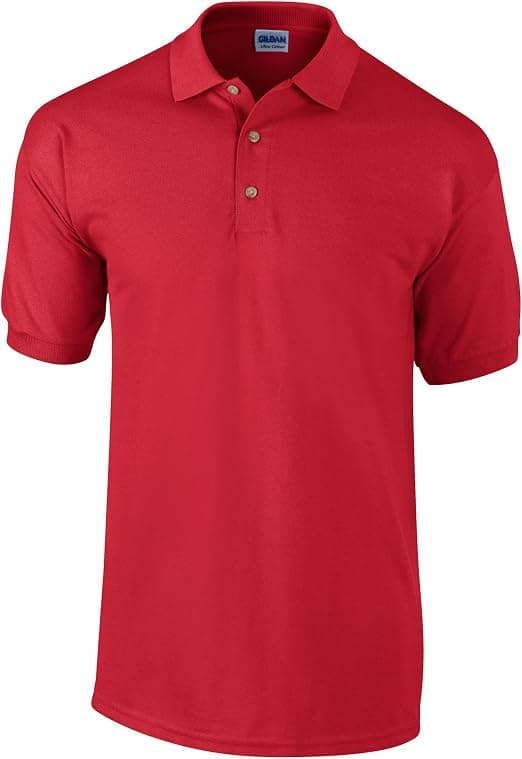
It matters more for staff uniform than for giveaway stock. A missing medium polo on a three-person stand is a visible problem in every photograph taken that week, and there is no production cycle short enough to fix it on site. The habit of building that margin in is covered in building a launch calendar that does not slip.
What belongs on the stand?
Two categories, ordered separately. Staff kit, which should be consistent, fitted properly and carry the brand where a camera will see it; polos from $18 and caps from $12 are the common choices because both photograph cleanly and neither needs ironing at seven in the morning. Then the pieces you are actually showing, which are your product and deserve the private label treatment in full.
Each of those is a separate design at 50 pieces, which is worth knowing before the budget is drawn up. Custom woven neck labels, tear-out labels and swing tags all matter more at a show than online, because a buyer picks the garment up and turns the collar out. That inspection is exactly what branding beyond the print is about.
How do you handle a show added at short notice?
Lean on what already exists. A repeat of an approved design skips artwork and sampling entirely and needs only the production window plus transit, which is why a brand with one proven staff polo can react to a late invitation in a way a brand starting from scratch cannot.
If nothing suitable exists, simplify hard. One garment, one colour, one print position, a stock shade rather than a matched one. Keep the private label ambitions for the next order and get something consistent on the stand rather than something perfect that arrives after the doors close.
It also helps to keep a standing show kit rather than ordering for each event. A neutral staff garment without a date, a venue or a year printed on it can be worn at every show in the calendar, topped up with a repeat run whenever the cupboard runs low. That approach turns a recurring scramble into a single annual decision.
Count what comes back, too. Shows are where kit goes missing, gets marked or is given away in a moment of enthusiasm, so the stock you return with is rarely the stock you left with. Note the gap while it is fresh and the next order is sized from experience rather than from the original packing list.