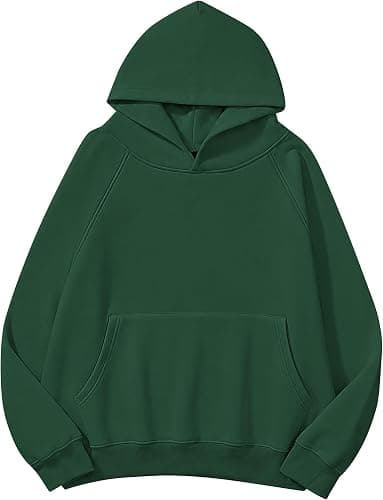
Can I Mix Garment Types in One Order?
By The Velocity Wear Team
Need this made?Get pricing for this product— free, no obligation, 50 pieces minimum.
Yes for the minimum: the fifty pieces are counted across the order rather than per product, so hoodies, tees and polos can sit in the same run. What multiplies is not the garment types but the setups. One artwork across mixed garments is straightforward. Five artworks across fifty pieces is five short jobs that happen to share a delivery.
What Mixing Costs and What It Does Not
Sizes are free to mix because the press is set up for a design, not a size. Garment types are generally fine too, within reason. The cost driver is the number of distinct decoration setups: each separate artwork, each additional print position and, on screen printing, each ink colour. Understand that and the whole question becomes easy to answer for yourself. Ask how many times somebody has to change what the machine is doing.
One Logo, Two Fabrics, Two Results
Here is the part that catches people out. The same decoration behaves differently on different fabrics, so a mixed order can come back looking less unified than you expected. Sublimation is polyester only and light bases only, so it cannot be your answer for a run that includes cotton tees. DTG is cotton only. Screen printing works across many fabrics but needs different handling on polyester. DTF is the pragmatic choice for genuinely mixed orders because it works on cotton, blends and polyester alike, and embroidery is the other cross-fabric answer where the look suits.
The Same Colour Is Not the Same Colour
Even with one method, an ink or thread reads differently on a brushed hoodie fleece than it does on a smooth polo, because one surface scatters light and the other reflects it. Add different garment colours underneath and the perceived shade moves again. If a mixed order needs to look like one family, keep the garment colours tight and accept that the finish will vary slightly by fabric. That is a physical property of the materials, not a quality problem.
Placement Does Not Transfer Automatically
A chest logo positioned nicely on a tee does not land in the same place on a polo, because the placket is in the way and a centred design will sit on top of it or beside it. Hoodies bring their own obstacles: a kangaroo pocket eats the lower front, and a zip splits any central artwork in half. Caps have a curved, structured front with limited height. If you are mixing garments, expect placement to be decided per garment rather than once for the order.
- Use one artwork across the mixed garments wherever you can, since setups multiply and sizes do not.
- Pick a method that covers every fabric in the order, which usually means DTF or embroidery for mixed cotton and polyester.
- Approve placement per garment, especially anything with a placket, a pocket or a zip.
- Keep garment colours within a tight range so the same ink reads consistently across the run.
- Remember that the whole order dispatches together, so the slowest item sets the delivery date.
Light and Dark in the Same Run
Mixing light and dark garments is common and perfectly workable, but on screen printing the dark half needs a white underbase that the light half does not. Practically, that means the two halves are not identical work, and the finished print can look marginally different in weight between them. If a perfectly uniform look across light and dark matters to you, say so up front, because there are ways to design around it, chiefly by choosing artwork that does not depend on subtle tonal transitions.
“"One order, one deadline, one delivery. The production floor still sees five separate jobs, and the slowest of them decides when your box leaves."”
Lead Time Follows the Slowest Item
A mixed order moves at the pace of its most complicated component. Screen printing and embroidery typically run around 10-15 working days from artwork approval, while sublimation and complex multi-part jobs sit nearer 15-20. Add an embroidered softshell to a run of printed tees and the whole delivery inherits the longer window. That is worth knowing when the deadline is fixed, because occasionally the right answer is to split the order so the urgent half is not waiting on the fiddly half.
When to Split and When to Consolidate
Consolidation usually wins. One order means one set of setups, one delivery, and a better position on the discount bands, which reach up to around 35% as quantities rise. Splitting makes sense in two cases: when one part of the order is genuinely urgent and the rest is not, and when one component would drag the whole run into a much longer production window for no reason. Outside of those, three departments ordering separately are paying three times for the privilege of not having spoken to each other.
Sketch It Before You Order
The free Design Studio lets you lay the same artwork on each garment and see how it sits, which is the quickest way to find out that your logo fights the polo placket or gets swallowed by a hoodie pocket. The free instant price calculator will then show how the mix changes cost as you adjust garment, method and quantity, so you can test whether adding that fourth product is worth what it does to the total.