Sizing a Clothing Order for Bands
By The Velocity Wear Team
Sizes mix freely inside the 50-piece minimum, so a merch run is shaped entirely by what sells. A workable first split is around five small, twelve medium, sixteen large, twelve extra large and five double extra large, weighted towards the middle. After one tour you will have real numbers, and real numbers beat any starting ratio.
What size split sells through on a merch table?
Large is the size that empties first at almost every table, followed by medium and extra large. The two ends of the range move slowly, and a run that is evenly divided across five sizes ends the tour with a box of pieces nobody wanted. Weight the middle three sizes to roughly four fifths of the order. Because no size carries a surcharge and none has its own minimum, this costs nothing to get right and costs real money to get wrong. Ordering detail is on the wholesale page.
Does every design need every size?
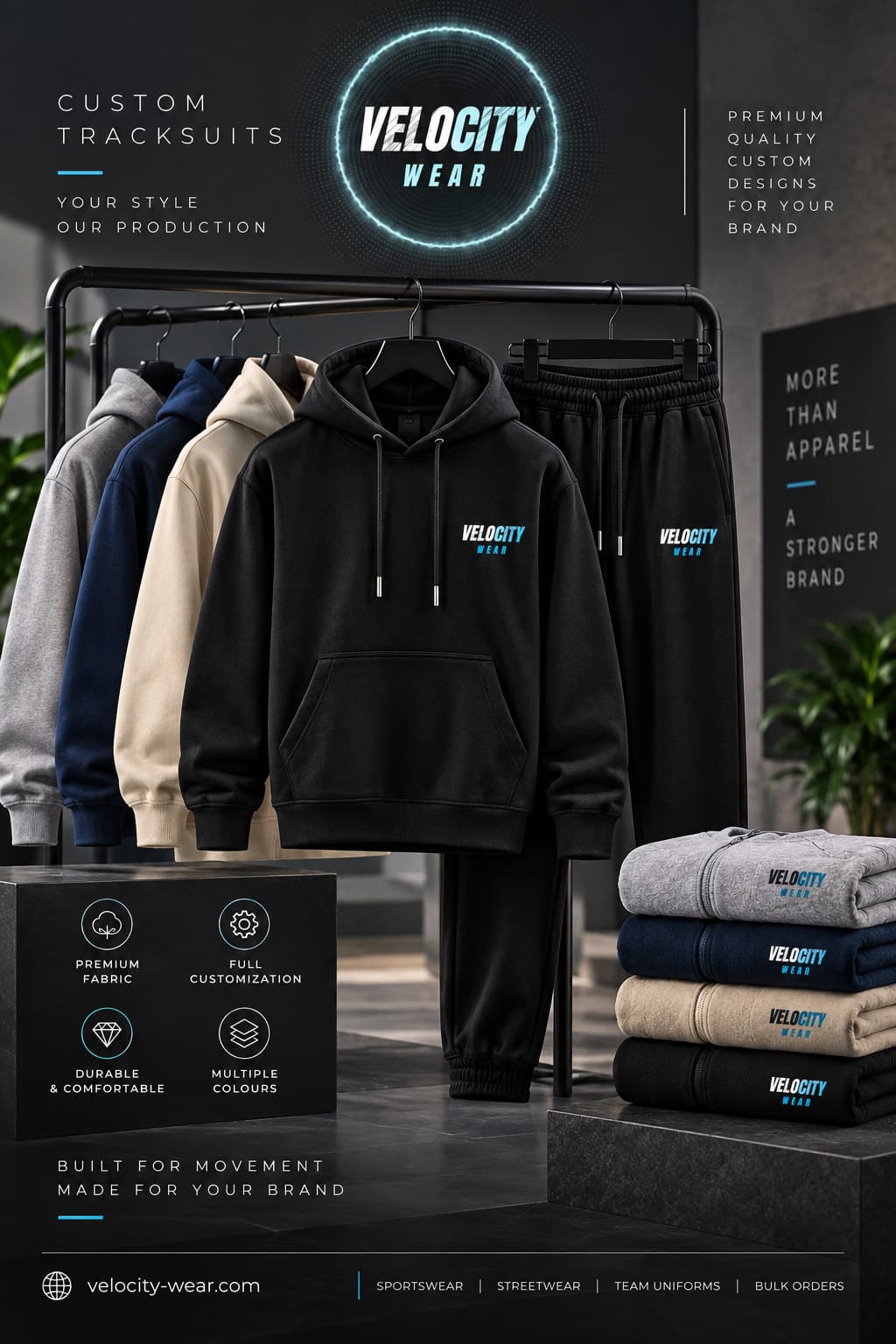
No, and pretending otherwise is how merch budgets get wasted. A flagship tee can run the full range. A limited hoodie at $31 a piece, or a tracksuit set at $53, is better run in three sizes that will definitely sell than five that might. Fans accept a narrow range on a limited piece in a way they do not on the main shirt. How garment sizing is graded across a range explains why the measurements between sizes matter as much as the labels.
What do you do when one size sells out first?
Record it, then act on it at the reorder rather than mid-panic. A restock is a fresh run and still needs 50 pieces, which is precisely why the second order should be placed while the best size still has stock rather than after it has gone. Keep a simple tally per date: sizes sold, sizes asked for and not available. The second number is the valuable one, because it measures demand you did not meet. Restocking merch between dates covers the timing.
Does cut matter more than size on merch?
It matters just as much. A boxy tee and a fitted tee labelled large fit differently, and a fan who bought the last shirt expects the new one to match. Keep the same blank across runs where you can, and if the cut has to change, say so at the table. Relaxed cuts also widen the range each size covers, which makes a narrow split safer. The bands and music page lists the garments we run most often for merch.
Should a hoodie run use the same split as a tee run?
No, and copying one onto the other is a common mistake. Hoodies are bought a size up more often than shirts, because people wear layers underneath and prefer the looser look. A hoodie run therefore skews further towards large and extra large than the same audience does on a tee. If you only have one set of numbers from a previous tour, shift them one size upwards before applying them to outerwear.
The stakes are higher too. At $31 a piece a hoodie ties up more money per unsold unit than a tee at $13, so a split that leaves five unsold hoodies costs roughly what fifteen unsold shirts would. Narrow the range on the expensive pieces and keep it wide on the cheap ones.
Print the size range on whatever the band uses to announce merch online, too. People who know what is available arrive at the table having already decided, which speeds up the queue and cuts the number of sales lost to somebody hesitating over a size that was never in the box. It costs nothing and it changes how fast the run clears.