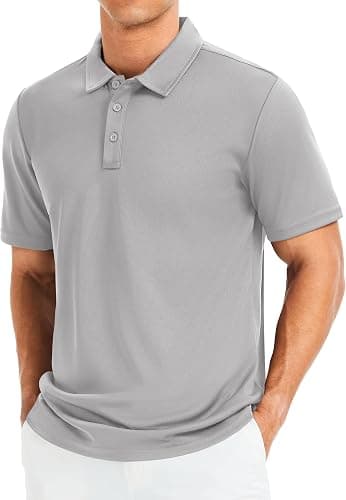
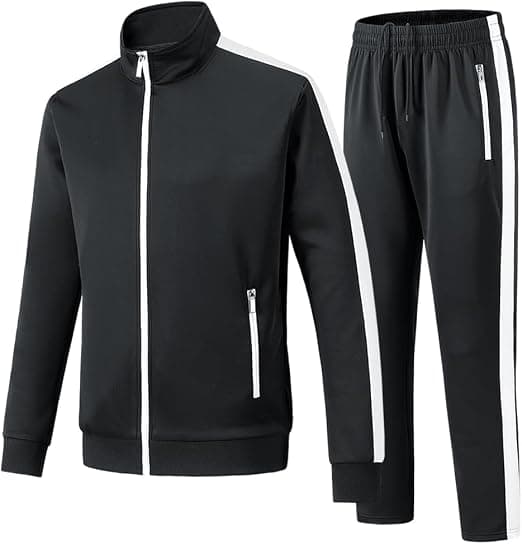
Running a Staff Uniform Allowance Scheme That Does Not Sprawl
By The Velocity Wear Team
Need this made?Get pricing for this product— free, no obligation, 50 pieces minimum.
A staff uniform allowance scheme works when three things are fixed: what each role is entitled to, when orders can be placed, and how leavers are handled. Give people an allowance without a fixed ordering window and you generate a stream of small orders that each sit at the worst end of the pricing curve. Give them a window without a clear entitlement and you spend the window answering the same question fifty times.
Allowances by Role, Not by Person
Build the entitlement around what the job requires. A warehouse operative needs different garments to a site supervisor, who needs different garments to someone on a reception desk. Write the list per role, publish it, and let managers assign people to roles rather than negotiating individual cases. The moment entitlement becomes personal it becomes a discussion, and the discussion is what eats the administrator's week.
Points systems are popular because they feel fair, and they do give staff useful flexibility over whether they take three polos or two polos and a softshell. They also add a layer of accounting for whoever runs the scheme. For a small team a plain fixed list per role is usually less work and just as fair. Points earn their keep once you have several roles and a wide catalogue.
Core Items and Optional Items Are Different Things
Split the catalogue in two. Core items are compulsory, standardised and paid for by the organisation. Optional items are the ones people take if they want them, and they are where variety is allowed. Keeping that line visible prevents the slow drift where an optional fleece becomes a de facto uniform item that half the team has and half do not, which is the state that makes a company look untidy on site.
Fixed Windows, Not Continuous Ordering
This is the operational core of the whole scheme. Run two or three ordering windows a year, publish the dates at the start of the year, and batch everything placed inside a window into one order. Velocity Wear works to a 50-piece minimum per order with sizes mixed freely, and bulk discounts reach up to around 35% as quantities rise, so the difference between batching and drip-feeding is substantial across a year. Production also starts at artwork approval rather than order placement, so a batched order needs only one approval cycle instead of one per trickle.
New starters are the obvious exception and they need a plan of their own, covered below. Everything else waits for the window, and staff accept that easily once the dates are known in advance.
New Starters Need a Bridging Stock, Not an Exception
If someone joins in week three of a twelve-week gap between windows, they cannot wait. The cheap answer is a small buffer of plain core items in the common sizes, held centrally, issued on day one and replenished at the next window. Buffer stock costs a little in tied-up value and saves a great deal in rush orders. Size it from your actual joining pattern rather than a guess, and keep the buffer limited to core items only.
Set a Replacement Cycle and Publish It
Replacement is where allowance schemes leak money, because without a stated cycle every request becomes a judgement call. State how long each garment type is expected to last in normal use, and state that damaged items are replaced outside the cycle on a like-for-like basis. Then hold to it. The published expectation is what allows a manager to say no without it feeling arbitrary.
- State an expected life for each garment type rather than one blanket figure, because a polo worn daily and a softshell worn in winter wear out at very different rates.
- Distinguish fair wear and tear from damage, and say plainly which one is replaced outside the cycle.
- Require the worn item to be returned or shown when a replacement is issued, which removes most of the ambiguity in one step.
- Record the issue date against each person so the cycle is a fact rather than a memory.
- Review the cycle once a year against what you actually replaced, and adjust it rather than defending a number that was never right.
“"An allowance scheme is not generous or mean. It is either written down or it is a series of arguments."”
Leavers, Returns and the Bit to Take Advice On
Decide in advance what happens to uniform when someone leaves: which items come back, which are theirs to keep, and what condition matters. Embroidered garments carrying the company mark are the ones worth recovering, and plain items usually are not worth the administration. Whether and how any cost can be recovered from a departing employee is an employment matter, not a purchasing one, so put the operational expectation in your policy and take proper HR or legal advice on anything touching pay, deductions or contractual terms.
Keep One Specification for the Whole Scheme
The reason a uniform stops looking like a uniform is drift. Someone reorders in a hurry, picks a similar polo from a different range, and eighteen months later the team is wearing three shades of the same colour. Hold a single specification sheet with the garment code, exact colour name, decoration method, thread colours, logo size in millimetres and placement measured from the high point of the shoulder, plus the approved proof. Order against the sheet every time. Embroidery is the usual choice for uniform because it wears well through repeated industrial laundering, but it needs fine detail and small text simplified, so agree that once and record the approved version rather than resolving it again at every reorder.