T-Shirts for Agencies: cost
By The Velocity Wear Team
Custom t-shirts for an agency campaign start at $13 a piece at our 50-piece minimum, and the unit price falls as quantity rises, by up to 35% across the tiers. The budget line a client signs off should also carry the £150 sample fee, which is credited back against the bulk order, and delivery. Nothing else is hidden in the number.
How is the per-piece price built up?
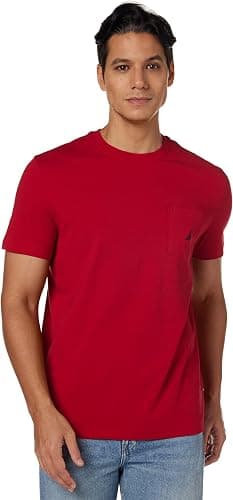
Three things move it: the blank, the decoration and the quantity. The blank is the garment itself — 150–240 GSM combed ring-spun cotton in a regular or boxy fit, with the heavier weights costing more. Decoration adds setup and run cost, and a four-colour screen print sets up differently from a single-colour chest mark. Quantity then applies across the whole thing.
For an agency the useful mental model is that setup is a fixed cost and pieces are a variable cost. A campaign that orders 50 pays the full setup across 50 garments. The same campaign at 500 spreads it across ten times as many, which is most of where the discount comes from. Current from-prices are on the wholesale t-shirts page.
Where do the volume tiers actually bite?
The tiers run 50–99, 100–249, 250–499, 500–999 and 1,000 plus, measured from the 50-piece price, with the discount reaching up to 35% at the top. The practical consequence for an agency is that a quantity sitting just under a tier boundary is a bad place to be. If the brief says 95 pieces, price 100 as well before you present the budget — the client often gets the extra five for less than the saving.
The other lever is consolidation. Three campaign moments at 50 pieces each is three runs at the entry tier. One run of 150 with the stock held back is one order in a better tier. That only works if the artwork is settled early, which in agency terms means getting the client to approve the design once rather than per activation.
What should go in the client budget line?
Put every element in explicitly, because an agency that absorbs a surprise pays for it twice — once in cash and once in the next scope conversation.
- Garment and decoration at the tier you expect to hit, not the tier you hope for
- The £150 sample, credited against the bulk order, so the net effect is a timing item rather than a cost
- Delivery to the client, the venue or both if the run is being split
- A contingency for artwork changes after approval, which is where campaign budgets usually leak
If the campaign is part of a wider corporate programme rather than a one-off, our corporate page covers how repeat kit and onboarding stock are handled, which changes the tier maths again.
Does a tighter deadline cost more?
Delivery is the line agencies most often forget to price. We deliver across the UK, USA and Europe and invoice in seven currencies, which is convenient when the agency and the client sit in different markets, but a run splitting across three activation cities is three deliveries rather than one. Agree the addresses at quote stage so the figure the client signs off is the figure that gets invoiced.
The production window is 10 to 15 working days from artwork approval, before delivery transit, and that is the window regardless of how the budget is built. What costs money is compressing the decisions ahead of it — rush artwork, a skipped sample, a colour called wrong. The lead time guide sets out where the days actually go, and the bulk pricing breakdown goes further into what each part of the unit price pays for.