Custom Clothing Printing in Halifax and Calderdale
By The Velocity Wear Team
Need this made?Get pricing for this product— free, no obligation, 50 pieces minimum.
For custom clothing printing in Halifax, short independent runs and business kit sit side by side, and the town's textile past makes buyers here unusually particular about the blank itself. Velocity Wear produces from a 50-piece minimum with mixed sizes, delivered across Halifax and Calderdale on a tracked service.
A Town That Made Cloth Now Buys It
Halifax spent two centuries producing worsted and carpet, and the evidence is still standing. The Piece Hall was built so merchants could trade cloth by the piece, and Dean Clough was a carpet mill large enough to function as a small town in its own right. Both are now occupied by independent retailers, studios and small businesses, and a good number of them order printed clothing. It is a slightly unusual market to sell into, because people from a town that made fabric tend to pick a garment up and feel it before they look at the price.
Weight, Handle and Why It Shows
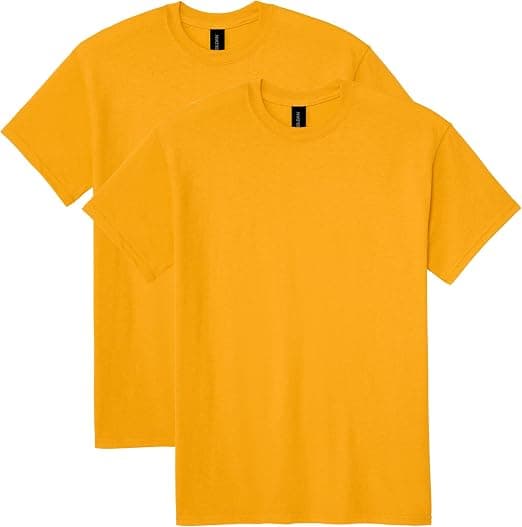
That instinct is correct. The difference between a 180 gsm tee and a 200 gsm ringspun one is obvious in the hand and more obvious still after ten washes. Ringspun cotton is combed and twisted more finely, so it takes ink with cleaner edges and holds its shape; carded open-end cotton is cheaper, coarser and perfectly adequate for a giveaway. The same logic applies to hoodies. A 350 gsm brushed-back garment reads as a product; a 280 gsm one reads as something handed out at a trade stand. If you are selling rather than giving away, the blank is not the place to economise.
Neck Labels and Own-Brand Presentation
One question small brands here ask constantly: can the manufacturer's neck label come out and yours go in? Yes, relabelling and printed inner-neck branding are both standard, and they change how a garment reads on a rail far more than most people expect. Two things to keep straight. Fibre content and care information still has to reach the customer somewhere on the garment, so check the current requirements and guidance on GOV.UK before stripping anything out. And a printed neck label needs the original tag removed cleanly first, which is a separate step to request up front rather than add later.
Short Runs Around the Piece Hall
Independent retail orders here are small and frequent, which changes the method calculation completely.
- DTF carries no per-colour setup, so a six-colour design costs the same to start as a one-colour one, usually winning between 50 and 100 pieces.
- Screen printing charges setup per colour but falls steeply per piece, generally taking over past roughly a hundred with a tight palette.
- DTG gives the softest hand feel on cotton, but it is cotton only, which rules out blends and polyester.
- Embroidery suits caps, beanies and anything washed hard, and it is the one method that looks better the more you spend on the garment.
Mill Conversions and Business Kit
Dean Clough and the smaller mill conversions across Calderdale house design studios, professional services and light manufacturing, and their orders are the corporate type: embroidered quarter-zips, polos and a modest chest mark. Restraint holds particularly well in a town like this. Halifax is not a place where an oversized logo across the chest gets worn to the pub, and a garment that only works inside the office is a garment that mostly lives in a drawer.
“"A logo cannot rescue a cheap garment. All it does is help the cheapness travel further."”
Where the Discount Curve Starts to Bite
Fifty pieces per order, sizes and garment types mixed freely. For a small brand testing a design that is a genuinely useful floor, because you can print a full size range and find out what sells before committing to anything. Bulk discounts reach up to around 35% as quantities rise, so the reorder of a proven design lands materially cheaper per piece than the test run did. Model both in the free instant price calculator before you set a retail price rather than after.
Proofing Before the Clock Starts
Production begins at artwork approval. Screen printing and embroidery typically run around 10–15 working days from there, plus 2–5 working days tracked delivery into Calderdale. Supply vector files, give exact colour references rather than descriptions, and check small text at actual size. Script and hand-drawn logos are common among independents here and most of them need simplifying before they will stitch legibly, which is a decision better made deliberately at proof stage than discovered on the finished garment. Lay it out in the free Design Studio first.